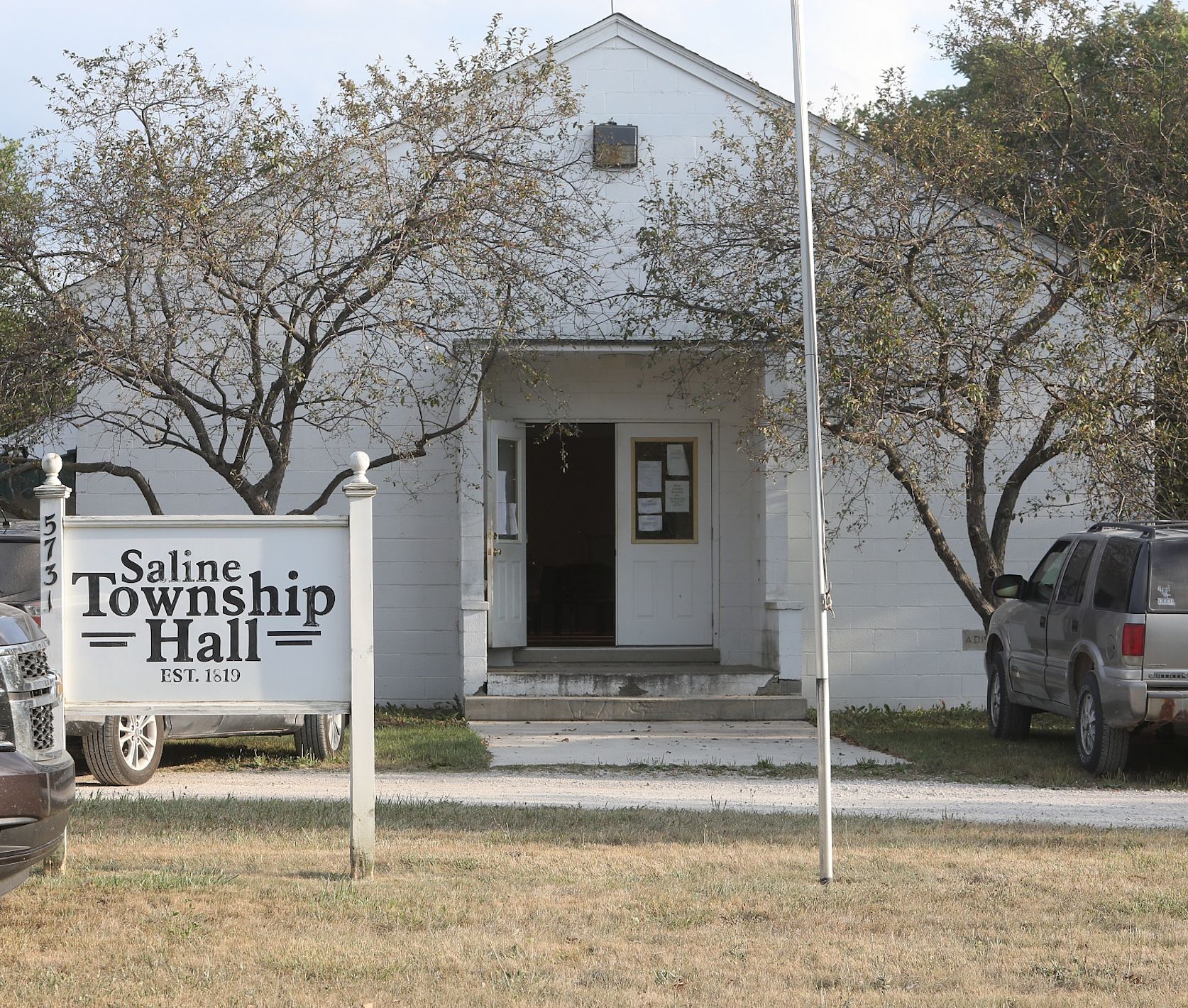





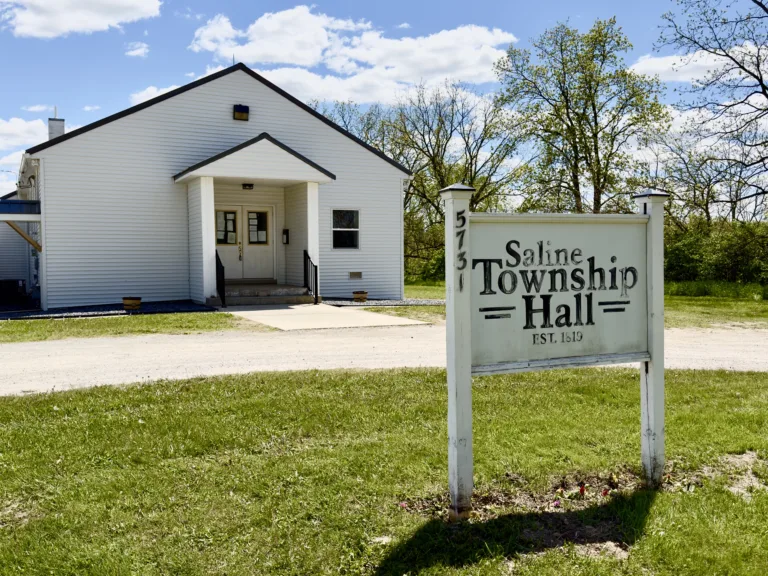
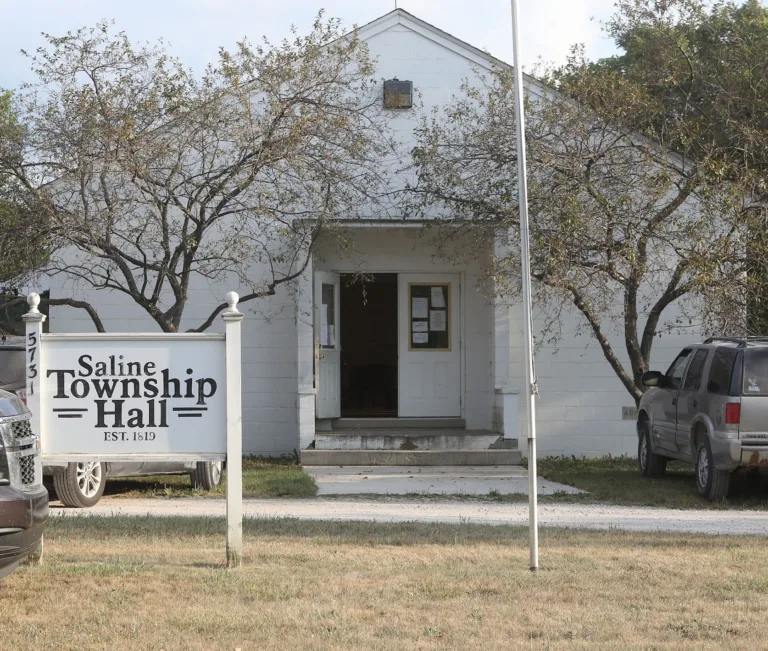
Saline Township resident Kathryn Haushalter filed a civil suit against the township, pursuing a “Motion to Intervene” in the consent agreement that settled the lawsuit between Related Digital (RD)/property owners and Saline Township, which was heard Friday at 10 a.m. by Washtenaw County Judge Julia Owdzie.
Haushalter’s motion to Intervene petition was required to be granted standing by the court in order for the suit to proceed. Robert (Robby) T. Dube, from the law firm Eckland & Blando, based in Minneapolis, Minnesota, presented the oral arguments on behalf of Ms. Haushalter. The motion to intervene puts forth three main arguments.
- Because Saline Township’s zoning ordinance prohibits conditional rezoning and requires that any rezoning application containing proposed conditions be returned without Township review or consideration, the Township did not have the authority to consider RD’s data center proposal at all.
- The Consent Judgement effectively authorized a form of conditional rezoning that is barred by the adopted Saline Township zoning ordinance, and the Township Board did not take a public vote to approve the final Consent judgment language or to authorize officials to execute it, and therefore violated the Open Meetings Act and Township authorization practice.
- The filings ask the Court to grant Haushalter’s motion to intervene so that she can bring a motion to vacate (set aside) the judgment if intervention in granted.
Dube asserted that the township voted to approve to settle the lawsuit while in closed session, relying on meeting minutes. The township acknowledged that the meeting minutes were recorded in error. Representing Saline Township was David Landry, from Landry, Mazzeo & Dembinski, PC while representing RD was Alan M. Greene, Dykema Gossett, PLLC. Both attorneys stated that there was a written transcript of the board meeting in question which clearly documented that the vote to approve the RD suit was taken during an open session.
Greene and Landry also said that Haushalter filing of the suit was outside of the time limits allowed for a motion to intervene could be filed.
After considering all of the oral arguments, Judge Owdzie denied the suit citing that Haushalter failed to meet the standards required to be granted status to intervene in the consent agreement. “It is hard to rely on meeting minutes as representing what happened when there is documented evidence of what really occurred.” And with that, she denied the motion.
Contacted following the decision, Dube said that an appeal is an option available to Haushalter but a decision on whether to appeal has not been made. When asked his reaction to the ruling, Dube said, “We were surprised. Michigan law is clear that the intervention rules are to be liberally construed to provide for intervention. The Township and RD focused on the harms of removing the consent judgment, which we dispute, but that was not the proper focus of the hearing. It should have only been on whether Kathryn could intervene.”
Dube continued, “The Court also erred in saying Michigan law does not require a case to be open to intervene, the Court of Appeals is clear that a final judgment does not foreclose intervention. And, to hold that 60 days is too long of a delay is simply untenable given cases have allowed intervention up to 10 years after a case started.”










 114 North Main St Suite 10 Chelsea, MI 48118