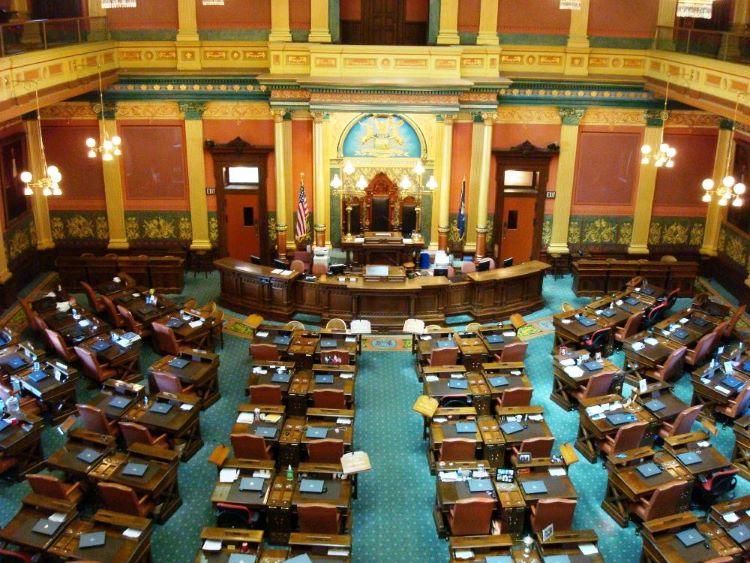
A package of bills introduced in the Michigan House on Dec. 16, during the Legislature’s quieter holiday period, when new proposals are often filed but debate and hearings have yet to fire up, would exempt some property owners from paying certain school-related property taxes, based on whether they have dependents using Michigan’s public K–12 education system.
A package of bills introduced in the Michigan House on Dec. 16 could exempt some property owners from paying certain school-related property taxes, based on whether they have dependents using Michigan’s public K–12 education system.
The holiday period is often a lull in Lansing, when new bills are introduced and referred to committee with debate and hearings firing up after the holidays.
Supporters of House Bills 5376-5379 frame the proposal as tax relief for people without children in public schools. Critics point out that the bills do not include any plan to replace the lost education funding.
The package proposes that owners of real or personal property who does not have a dependent attending a public school or receiving publicly funded K–12 education services in Michigan would gradually become exempt from certain taxes that are defined in the bills as “school-related property taxes.” The exemption would be phased in beginning in 2027 and would reach 100 percent by 2031.
The tax most notably affected would be the State Education Tax (SET), a statewide six-mill levy that helps fund Michigan’s School Aid Fund. Other school-related state taxes affected include school sinking fund taxes and certain levies tied to school borrowing. The bills do not eliminate all school taxes, however. Property owners would still be responsible for local school millages approved by voters, including bond millages and other locally approved school taxes.
Taxable value is often close to half of a home’s market value. The impact on individual property owners would vary.
For example, a home with a market value of $400,000 might have a taxable value of about $200,000. At the current six-mill SET rate, that homeowner would pay roughly $1,200 per year toward the SET. Under the proposed phase-in, a qualifying homeowner would see partial savings starting in 2027, with the full $1,200 savings taking effect by 2031. Actual savings could be higher or lower depending on a property’s taxable value and whether other school-related taxes apply.
The bills are not limited to residential property. Commercial and industrial properties could also qualify. Because those properties often have much higher taxable values, the potential dollar savings could be significantly larger for the owner. While the legislation includes language intended to prevent owners from avoiding the rules by placing property in private entities, commercial property would still be part of the overall impact.
The broader concern raised by critics of the proposal is its effect on education funding. While the bills clearly explain how the tax exemption would work and how eligibility would be determined, they do not include any provision to replace the revenue that would no longer be collected. There is no requirement in the bills for the state to backfill the School Aid Fund, nor is there an alternative funding source identified.
Without separate legislation, the reduction in school-related property taxes would mean less money flowing into the funds that support public education. Any effort to make up that difference would have to come later, either through new legislation, changes to the state budget, or future local tax proposals.
A key technical detail is that the four bills are tied together. None of the bills would take effect unless all of the tied legislation is passed and signed into law.
The hurdles for the package are significant. Before the proposal could become law, the bills would need to advance out of committee, pass the full Michigan House and Senate, and be signed by the governor. If any step fails, or if one of the tied bills does not pass, the package would not take effect.
The bills have been referred to the House Committee on Government Operations.
Source: https://legislature.mi.gov/





 8123 Main St Suite 200 Dexter, MI 48130