After a smaller introduction of the Collaborative Classroom curriculum last school year, Chelsea Schools are now seeing some positive results of its full implementation. Over the past few months into this current school year, Chelsea teachers say they are seeing results in student engagement, foundational skills and consistency across classrooms.
In his November report to the school board, Casey Wescott, Principal of North Creek Elementary School, gave a quick update about the program.
Wescott said he wanted “to take a moment to recognize the tremendous dedication of our teachers as they continue implementing the Collaborative Classroom ELA curriculum.”
“From last year’s pilot work and summer preparation to our August professional learning days, our staff has invested significant time and energy to ensure a strong and successful launch for our students,” Wescott said. “Their collaboration, care, and commitment to putting kids first have been remarkable.”
To learn more the Sun Times News followed up with North Creek to learn more.
A Collaborative Classroom
Wescott said North Creek and South Meadows Elementary School are in their first year of adopting a new literacy curriculum called Collaborative Classroom. He said last year, two teachers per grade level piloted the curriculum while all staff received introductory training in the spring. This school year, he said teachers continue to receive in-person professional learning from a Collaborative Classroom trainer to refine instruction and strengthen implementation.
“After a thoughtful rollout last year and full implementation this fall, teachers are seeing positive results in student engagement, foundational skills, and consistency across classrooms,” Wescott said.
Why a Change
Putting this curriculum forth began with Chelsea Schools reviewing its curriculum, which it does on a five- to seven-year cycle to ensure it reflects current research and meets students’ needs. Wescott said over the past several years, most North Creek teachers completed LETRS training (Language Essentials for Teachers of Reading and Spelling), which he said was “a deep dive into how the brain learns to read and how to apply the science of reading in the classroom.”
He said Collaborative Classroom “was selected because it directly aligns with this learning.”
“It provides the structure, materials, and instructional processes teachers need to bring evidence-based literacy practices to life for young learners,” Wescott said. “In short, the curriculum reinforces everything staff has been studying and supports a strong, district-wide vision for early reading instruction.”
Wescott said the adoption of Collaborative Classroom represents a shift toward a unified, research-aligned approach to literacy in Chelsea.
He said, “Collaborative Classroom is grounded in the science of reading and is an approved curriculum by the Michigan Department of Education. It addresses every area of literacy—phonological awareness, phonics, fluency, vocabulary, comprehension, and writing—within a cohesive whole-group framework.”
He said classrooms have common routines, shared language, and aligned expectations—“supporting students as they progress from Kindergarten through 5th grade.”
What makes it Unique
Wescott said Collaborative Classroom stands out because it intentionally builds age-appropriate literacy skills at every grade level. He said in kindergarten and first grade, students develop handwriting as part of their early literacy foundation, and then as they move into first and second grade, they engage in word study designed to strengthen phonics and word recognition through explicit instruction and practice—key building blocks for reading fluency and comprehension.
A significant strength is its differentiated small-group phonics instruction, allowing teachers to meet students exactly where they are, Wescott said.
“The curriculum also includes a vocabulary component at every grade level, giving students rich exposure to new words in meaningful contexts,” said Wescott. “This strategy helps students deepen comprehension, communicate clearly, and make thoughtful connections between language and personal experience. A strong vocabulary becomes a launching pad for students to tackle increasingly complex texts with confidence.”
He said students also receive explicit comprehension instruction, supported by frequent formative assessments that help teachers adjust their instruction.
Wescott said, “Engaging stories reinforce the skills taught in small groups, while nonfiction texts and writing-about-reading activities give students real-world literacy experiences starting at a young age.”
“In every classroom, readers are talking, collaborating, thinking critically, and using authentic texts to build strong reading habits,” he said.
So how is it going?
Wescott said Chelsea’s literacy team is proud of the progress so far—“and excited about the continued growth ahead.”
He said, “Collaborative Classroom is not just a program; it’s a shared commitment to giving young readers the strongest possible start.”
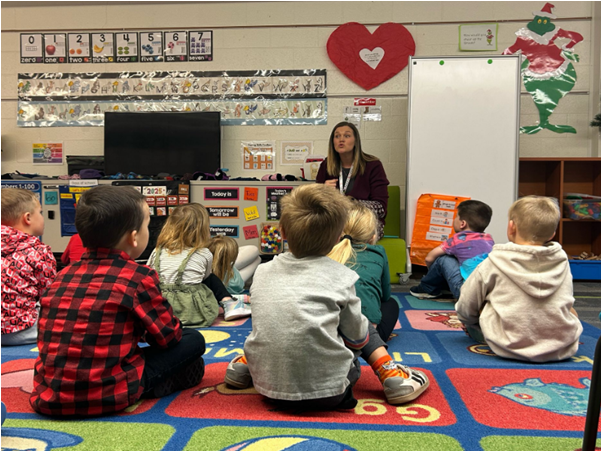
Photo: A Dec. 9 post by North Creek on its X account captioned: Young 5’s are building their reading muscles! Mrs. Mann’s Young 5’s class explored words through rhyming, counting, pronouncing, blending, and segmenting syllables. Students were having fun while building literacy skill through collaboration, communication.





 8123 Main St Suite 200 Dexter, MI 48130