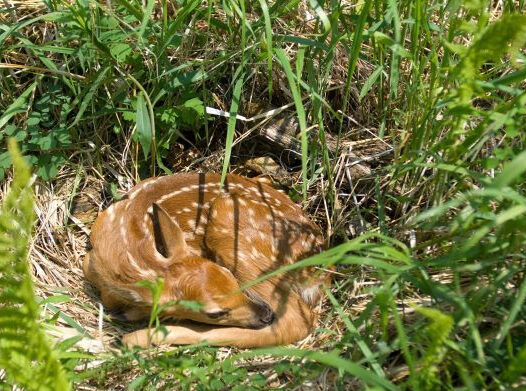


When a local reader’s granddaughter spotted a fawn lying motionless in the tall grass along the edge of their yard, she worried it might be injured or abandoned. Wildlife experts say that scene is common this time of year, and in most cases, the best thing people can do is leave young wild animals alone.
According to a recent Michigan Department of Natural Resources (DNR) newsletter, spring is baby wildlife season, and if you spot a fawn, rabbit or young bird by itself, wildlife experts say the best thing to do is leave it alone.
Mother rabbits and deer often leave their young unattended for hours while they forage. The babies are born with little or no scent, helping them avoid predators. Too much activity around them, including from people, can attract unwanted attention.
The DNR emphasizes that unless an animal is clearly injured or in immediate danger, keep your distance and allow the parent to return. Injured wildlife should be reported to a licensed wildlife rehabilitator.
Many wild animals nest near homes and businesses because human activity can deter predators. Birds, for example, often build nests in locations that may seem inconvenient to people.
Bird nests can only be removed if they contain no eggs. Under the Migratory Bird Treaty Act, active nests with eggs or chicks are protected and cannot be moved, touched or destroyed without a permit.
Homeowners can discourage nesting in problem areas by installing barriers or deterrents before birds lay eggs.
If an active nest is nearby, keep pets and children away and leave it undisturbed.
Young birds frequently leave the nest before they can fly well. Known as fledglings, they continue to be fed and protected by their parents while on the ground. Moving a fledgling can prevent its parents from finding it.
Wildlife officials say young animals have the best chance of survival when left in their natural habitat, where they can learn to survive on their own.
The DNR reminds folks that only licensed wildlife rehabilitators may possess abandoned or injured wildlife. A directory of licensed wildlife rehabilitators can be found at https://tinyurl.com/2s3ab7sm
Featured photo: A newborn fawn rests quietly in tall grass, where its natural camouflage helps protect it from predators while its mother forages nearby. Wildlife officials say fawns are often left alone for long periods and should not be disturbed unless they are clearly injured or in danger.Photo: MDNR















 114 North Main St Suite 10 Chelsea, MI 48118