Sometimes you wanna go
Where everybody knows your name
And they’re always glad you came.
The television sit-com “Cheers” represented a universal truth: we all need to feel personally connected. In this digital age, that can be even more challenging, but now there’s a new-old twist: women, and a growing number of men, are joining or forming quilt clubs, which promote creativity and provide camaraderie in a place where new acquaintances become old friends.
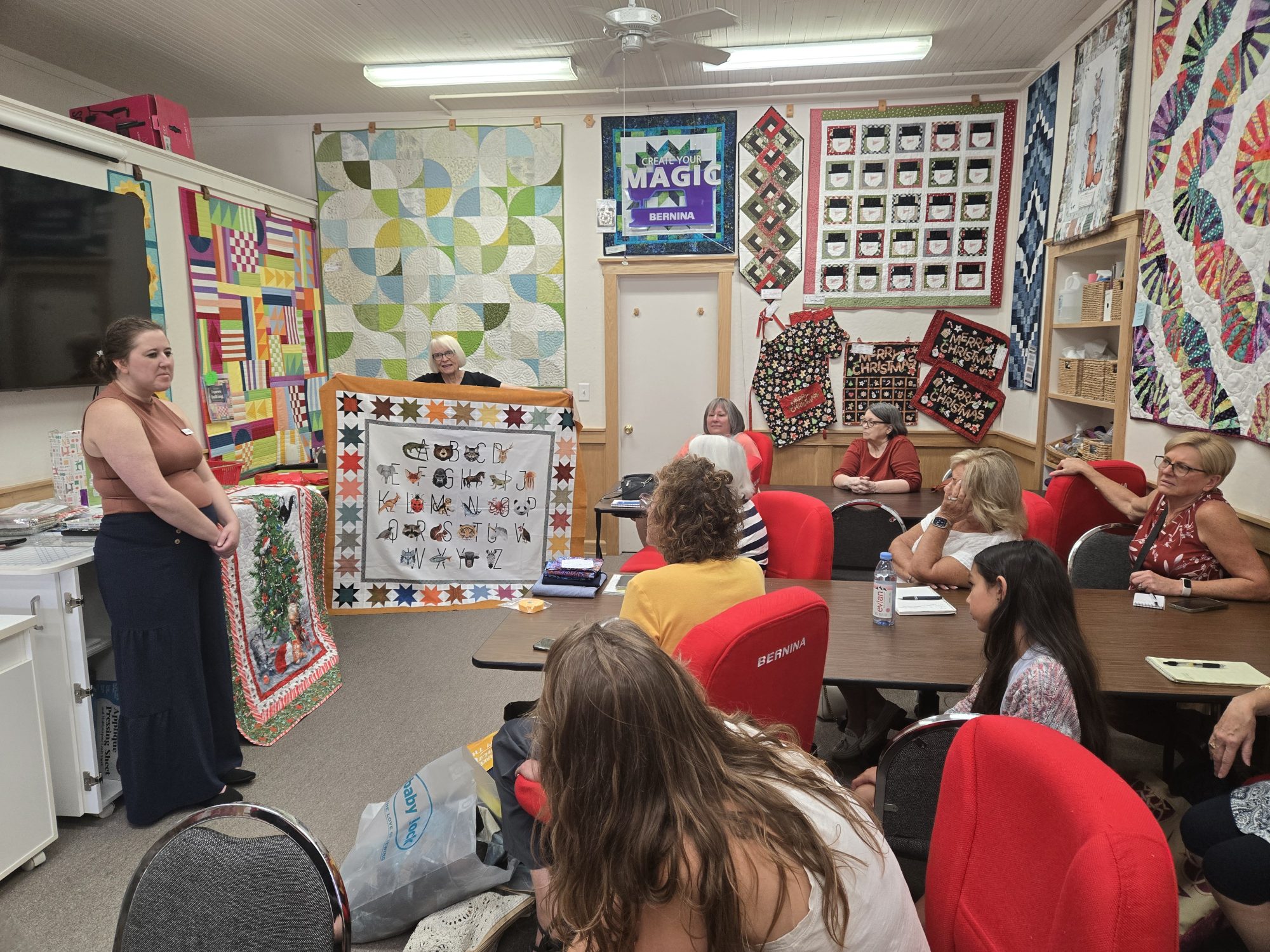
On a blustering afternoon with a forecast of snow, nineteen women crowd into Ann Arbor Sewing Center’s lesson room. Before the Quilt Club begins, several discuss a new ruler that makes a precise log cabin quilt pattern. Others chat about a new line of fabrics, debate whether to make “flying geese” singly or in batches of eight, share patterns and photographs of projects, and discuss sewing and quilting machines. One woman brings back issues of quilt magazines to share, another offers a pile of fabrics “to lighten my stash.”
“The pandemic made us all feel so isolated,” says Taylor Martel, club facilitator, before the meeting begins. “We’re here because of a common need to be with others, to feel creative, find inspiration in what others are doing, and get help in problem-solving and trouble-shooting. You can find information online—but that’s not the same as working in person with others.”
“Quilt clubs give people a creative social outlet, a place to make new friends and show others what they make,” says Doni Houghtaling, owner of the Ann Arbor Sewing Center. “They’re part learning, part social. During the pandemic, people wanted a happy place, and we have become as much an entertainment destination as a business. We’ve tried to create a place where people can come to forget their problems, enjoy the array of colors and patterns, and become inspired to create something beautiful and useful.”
An Art Rooted in Necessity

Quilts require intricate math and aesthetic puzzles. Centuries ago, women without training in either math or geometry created outstanding works of art that became cherished family heirlooms. Often they sewed quilts by flickering candlelight at the end of a day or in a barn with a group of women sharing the work.
Historians suggest that patchwork may be the oldest form of needlework, since the earliest clothing was probably produced by sewing animal skins together. Although quilted clothing appeared as early as the eleventh century, early settlers to the Americas brought sewing skills that would eventually be applied to bedding.
Quilts are created with two pieces of fabric (top and backing) and a filler (batting) in between. Quilt tops can be appliqued (fabric designs sewn on top of a background) or pieced or both, using fabric swatches in different sizes, shapes, and configurations to create an infinite number of patterns. Once the “sandwich” is joined, decorative quilting stitches bind the three together to create a work of art.
America’s great tradition of quilt-making began in the nineteenth century, when women couldn’t let anything go to waste. They made something both beautiful and practical from scraps of old clothing, worn-out blankets, and linens. The art form almost disappeared by the mid-twentieth century, but the American Bicentennial in 1976 launched a quilt-making revival, explains Jennifer Eurg, owner of Jennifer’s Quilt Shop in Pinckney.
“I started quilting in 1973, at a time when quality fabrics were hard to find—but no longer. The arts of piecing, patchwork, applique, and quilting are flourishing—along with the urge to share our work and achievements with like-minded friends, new and old.”
One Quilt Club Routine

Precisely at one o’clock on a Tuesday afternoon, Taylor Martel welcomes her Quilt Club. Her audience ranges in age and experience, from aspiring quilters to guild members, but all share their time, tips, and laughter as well as their passion for fabric arts.
“We’re artists making beautiful works of art,” Martel reminds her audience. “By taking advantage of new design techniques, we elevate our art.”
She opens her power point presentation with examples of innovative quilt borders. “Why do borders matter? They should provide an interesting frame for your work, pulling together the quilt’s many colors. They’re also a way to make the quilt larger.”
For the next ninety minutes, she invites a show-and-tell, then offers how-to information about borders and binding, demonstrates the techniques necessary for the block-of-the-month quilt many are making, introduces new fabric lines and sewing-related products, shares successes and mishaps, and invites questions.
“I can’t wait until the next Quilt Club rolls around,” sighs a newcomer at the end of the program.
“This is a community connection,” agrees Suzanne Bayer, who has become a part-time shop employee “to support my addiction,” she admits. “All of us could stay home and quilt, but this is an important community connection for us—and it makes us all better at our craft.
“I’m motivated to come here because of the people,” she continues. “This place is so welcoming. I feel happy just looking at the shelves of fabrics and their amazing colors. We feel comfortable asking complete strangers for their advice when we’re coordinating fabrics for a new project or debating about a new pattern.”
Martel adds, “Every quilt club has a different personality, and its members have different levels of expertise—but that doesn’t matter. We gather to learn, to meet like-minded people, and to leave with new ideas.” The youngest woman in the room that day, she left a career in nuclear medicine to begin a career in piecing quilt designs, teaching, and starting a business in long-arm (mechanical) quilting. One of her masterpieces on display in the shop won first place in the most recent Ann Arbor Quilt Guild show.
A Place Where Friends Meet

“The Ann Arbor Sewing Center is the oldest quilt store in our area,” says Jennifer Eurg, whose shop in Pinckney is known as the shop where friends meet. “But I’m seeing quilt shops open up everywhere these days—Howell’s is the latest. Quilters make the rounds, looking for special tools, fabrics, patterns, books, and advice. Some shops sell sewing and long-arm machines, others focus on classes and fabrics. Many quilters join several quilt clubs for the camaraderie.”
The Ann Arbor Sewing Center charges an annual fee of $75 (“so people feel committed,” Houghtaling says) for its Quilt Club, and offers members a twenty percent discount on club days, ten percent otherwise. Other quilt clubs are more informal. Since she opened Jennifer’s in 1993, Eurg has hosted hand-sewing groups around her shop table Wednesday and Thursday mornings.
“My shop is too small to have larger groups or sewing machine stations,” she says. “But these gatherings bring together craftspeople who enjoy getting together with others.”
Eurg has managed to integrate more vibrant, colorful fabrics into her shop than other shops much larger.
“One of Jennifer’s claims to fame is her complete line of Moda fabrics and the huge selections of fabrics,” says Aileen Clark, an avid quilter who visited so often that she was offered a part-time job. “Jennifer really knows quilts. She can identify their age by their fabrics.”
And Men, Too?
“Are men allowed in here?” one dazed husband asked the owner of the Textile Fabric Shop in Tecumseh on a Saturday morning when clusters of women are operating sewing machines for a log cabin piecing class and others crowd the fabric aisles, or wait patiently by the cutting boards.
“Everyone is welcome here,” several women say in unison.
Besides formal classes, this shop hosts various quilt clubs, from Open Sew Wednesdays and Thursdays (for a $5 fee) to Ladies of the Night, a seven-hour sewing marathon scheduled once a month. Participants share gallons of coffee, advice, snacks, and companionship as they work. On the first Saturday of the month, friends gather to works on Quilts of Compassion, which are offered to neighbors in distress.
Good works often go hand-and-machine with sewing clubs, formal and informal. Some work on Quilts of Valor for veterans, others produce Wrap the World quilts, Quilts for Kids, quilts for kids entering the foster system, and quilts for homebound and hospital-bound patients. The Quilting Season in Saline has long been a collecting place for unwanted sewing machines and fabrics, which are donated to women in need, particularly immigrants.
Recently, to benefit local charities, the Quilting Season sold antique Singer sewing machines. “One Singer, manufactured in 1904, came with the vestiges of an ancient sewing project still under its presser foot, as if waiting for its owner’s return,” owner Mary Lindquist wrote on Facebook. “Somehow, that makes you feel close to that long-gone sewer.”
The sale reminded her of the challenges women have faced through the ages. “When I think of how women scrimped and saved to have a sewing machine to make clothing and bedding and household items for their families, I realize that these machines have a greater part in our history. Women essentially had very few ways to earn the money to buy one. I think of my grandma with her ‘egg money’ from the eggs she sold to her neighbors…What a special role sewing machines have played in women’s lives.”
Sewers and quilters gather at the Quilting Season for Second Shift Sewing evenings. When Rosalie Everett posted on the shop’s Facebook page, she explained why this evening was so special. “I had a fantastic time…! It was wonderful to be surrounded by fellow quilters…I met fellow New Englanders, another from Puerto Rico, a newly retired person, a Tula Pink fan, another woman making fabric-wrapped rope placemats.”
The Quilting Season’s goal is to be “a place where creativity and friendliness go hand in hand.” Its large lesson room hosts Project Help every Monday, for quilters with questions, as well as an open sew session the first three days of the week, between 10 a.m. and 5 p.m.
Why quilt?
“Quilting is meditational and very calming,” Suzanne Bayer says. “I quilt between four and six hours every day. I never listen to television or music. I’m totally immersed in the challenge of joining small pieces of fabric into intricate patterns, and then making something beautiful as well as useful.” After a year in the Quilt Club, she turned her passion into a business, selling baby quilts and quilted bags on Etsy.
When Linda Britton moved to Chelsea seven years ago, the first thing she did after unpacking was visit our region’s quilt shops. “I learned that the Quilting Season has a group that meets regularly to sew pillowcases and quilts for children in Mott’s Children’s Hospital. I went once and immediately realized I’d found a home-away-from-home. Those friends have become my community.”
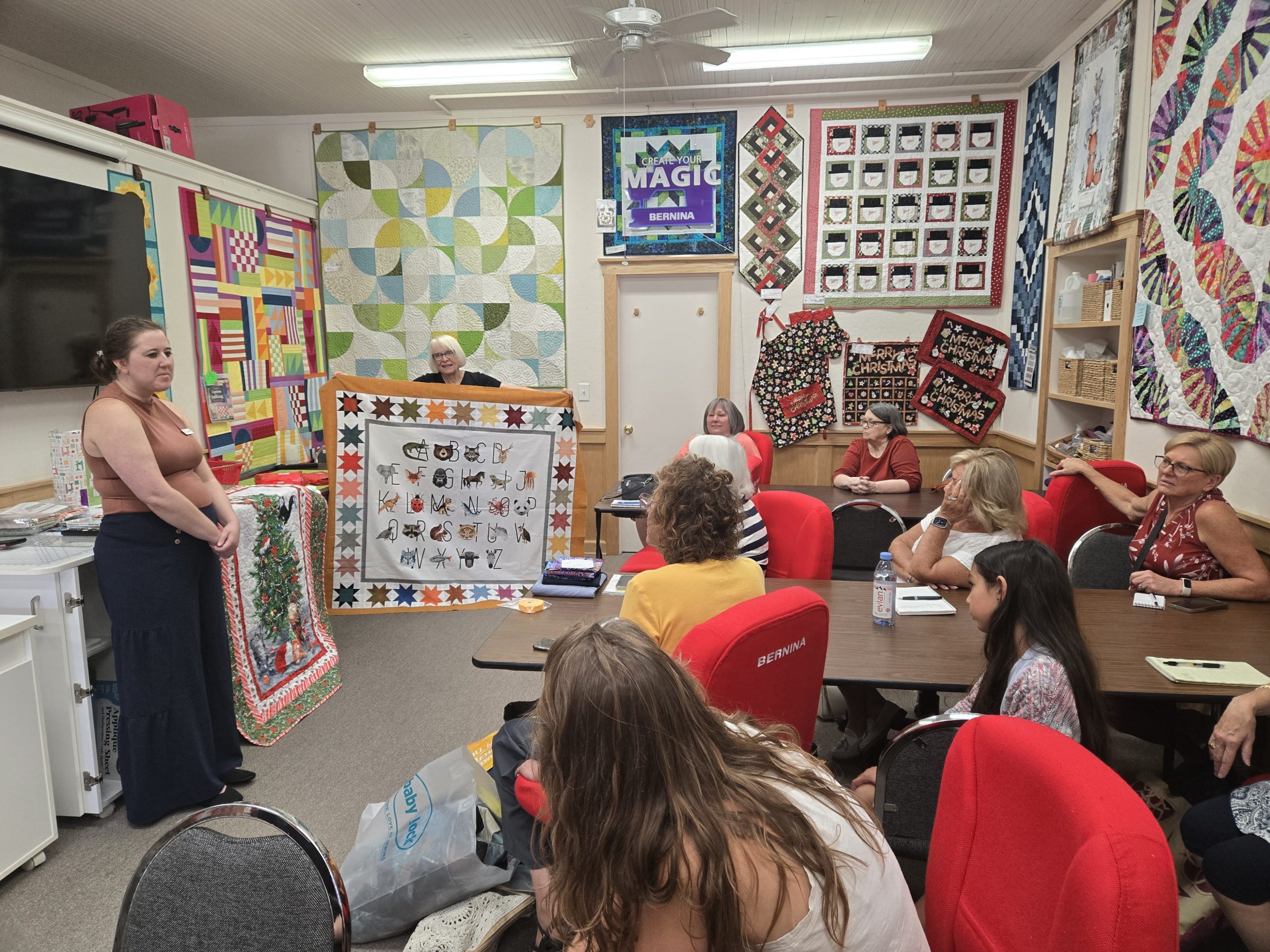
Featured photo: As many as 19 women gather at the Ann Arbor Sewing Center for each quilt club meeting. Photo courtesy of Cynthia Reynolds




 8123 Main St Suite 200 Dexter, MI 48130