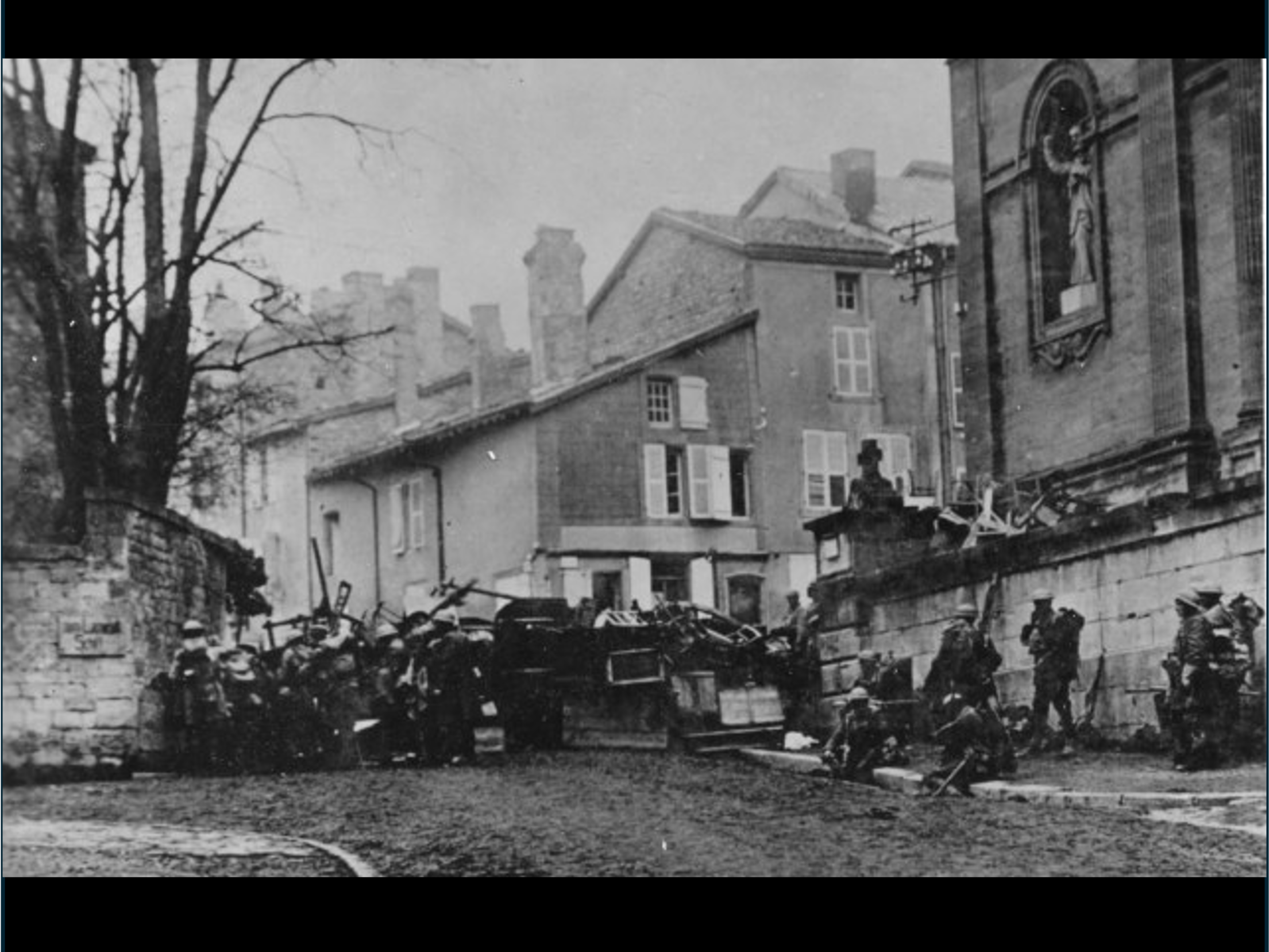
Photo: Taken at 10:58, 11 November 1918, just before the Armistice went into effect; men of the 353d Infantry, near the church at Stenay, Meuse in France, wait for the end of hostilities. Photo: US Army Center of Military History
On the 11th hour of the 11th day of the 11th month in 1918, the guns of World War I fell silent. The armistice between the Allied nations and Germany ended the fighting that had claimed millions of lives, and one year later, President Woodrow Wilson declared November 11 a day of remembrance for those who served in “the war to end all wars.”
That day of remembrance evolved over time into what we now know as Veterans Day, a national holiday honoring all who have served in the United States Armed Forces.
From Armistice Day to Veterans Day
In 1926, Congress passed a resolution calling for an annual observance of Armistice Day, and by 1938, it was recognized as a federal holiday dedicated to world peace and those who fought in World War I.
After World War II and the Korean War, America’s military had grown far beyond the generation of 1918. Veterans’ organizations began lobbying to broaden the holiday to honor all veterans, not just those of World War I.
In 1954, Congress replaced the word “Armistice” with “Veterans,” and President Dwight D. Eisenhower signed the change into law. From that point on, Veterans Day became a time to recognize all who have served in any branch of the U.S. military, in war or peace, living or deceased.

Date Change and Restoration
In 1968, Congress attempted to move Veterans Day to the fourth Monday in October as part of the Uniform Monday Holiday Act, intended to create more three-day weekends for federal workers. The shift caused confusion, and many states continued to observe the holiday on November 11.
In 1975, President Gerald Ford restored the date to November 11, beginning in 1978, to preserve its historical and symbolic meaning tied to the end of World War I.
Honoring All Who Served
Veterans Day is often confused with Memorial Day, but the two serve distinct purposes. Memorial Day honors those who died in military service, while Veterans Day celebrates all who have served, past and present.
Each year, communities across the nation hold parades, ceremonies, and moments of silence to honor those who put on the uniform in defense of the country. The day stands as a reminder of the courage, sacrifice, and service of millions of Americans who have answered the call to duty.
Sources:
- U.S. Department of Veterans Affairs | History of Veterans Day
- History.com | History of Veterans Day
- The National WWI Museum and Memorial | Origins of Veterans Day
- Military.com | The History of Veterans Day
- Wikipedia | Veterans Day
- Airborne & Special Operations Museum Foundation | The History of Veterans Day




 8123 Main St Suite 200 Dexter, MI 48130