



The Saline Area Schools Board of Education approved final spending changes for the current school year and its first 2026-27 plan on June 9, even as key state revenue figures remain unsettled.
The board voted 6-0, with Dr. Lauren Gold absent, to adopt the 2025-26 final amended budget, the original 2026-27 budget and the 2026 L-4029 tax rates. The vote followed a budget hearing led by Miranda Owsley, assistant superintendent of finance.
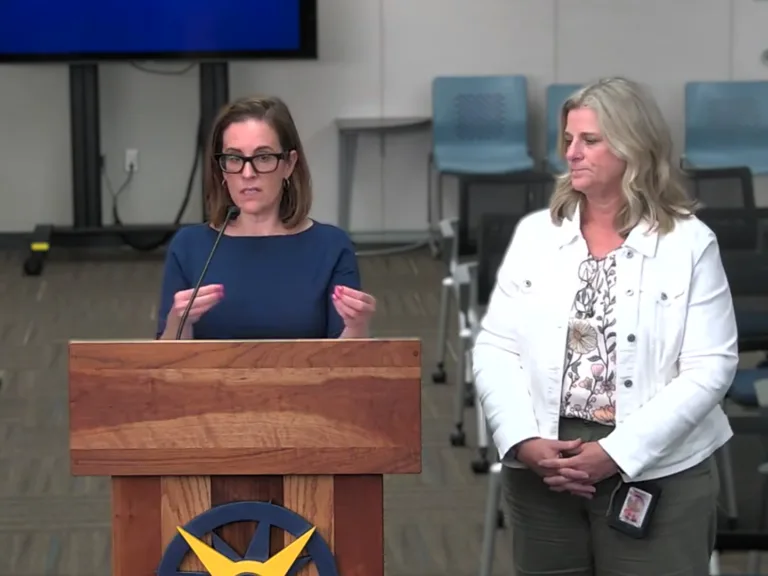
Owsley said Michigan school districts must adopt their budgets before July 1. That can be challenging because the state budget, which provides about 70% of Saline’s general fund money, had not yet been finalized.
“So we are just taking our best stab at what it will be,” Owsley said.
For 2026-27, Saline is budgeting $82.16 million in general fund revenue and $87.71 million in expenses. The district expects to begin the year with an estimated $20.25 million fund balance and end with about $14.69 million.

The plan assumes 10 fewer students, a $250 per-pupil increase in the state foundation allowance, about $2 million more in special education funding and about $1 million in career and technical education millage funding to help offset teacher costs.
Owsley said the $250 increase would bring the foundation allowance to $10,300 per student. She said that figure was included in the state House, Senate and governor’s proposals, but cautioned that it was not final.
On the expense side, Saline is planning for salary increases under negotiated contracts, rising special education staffing needs, insurance and utility increases, position changes and higher substitute costs.
Superintendent Rachel Kowalski said the district remains on “strong ground,” with one of the healthiest fund balances in its history. She said the new budget draws on some of that balance intentionally.
“So we are planning from a position of strength,” Kowalski said, “while we continue to make good decisions and build structures and systems that are proactively addressing costs along the way.”
Owsley also explained why rising local taxable values do not automatically mean more general fund money for Saline schools.
Under Michigan’s Proposal A school funding system, the state sets a per-pupil amount. Local taxes make up part of that total, and state aid fills in the rest.
That means if local tax collections increase, the district’s total general fund revenue does not automatically rise. Instead, local taxes cover a larger share of the state-set amount, and the state pays a smaller share.
Board President Tim Austin said that point is especially relevant to recent public comments about data centers and school funding. New taxable value from a project could shift more of Saline’s per-pupil funding to local taxes, but it would not increase the district’s total general fund revenue.
The district is expected to amend the budget during the year as more state information becomes available and actual revenues and expenses become clearer.
















 114 North Main St Suite 10 Chelsea, MI 48118