




When someone in Washtenaw County calls 911 for both police and medical help, the call may move through two separate dispatch centers.
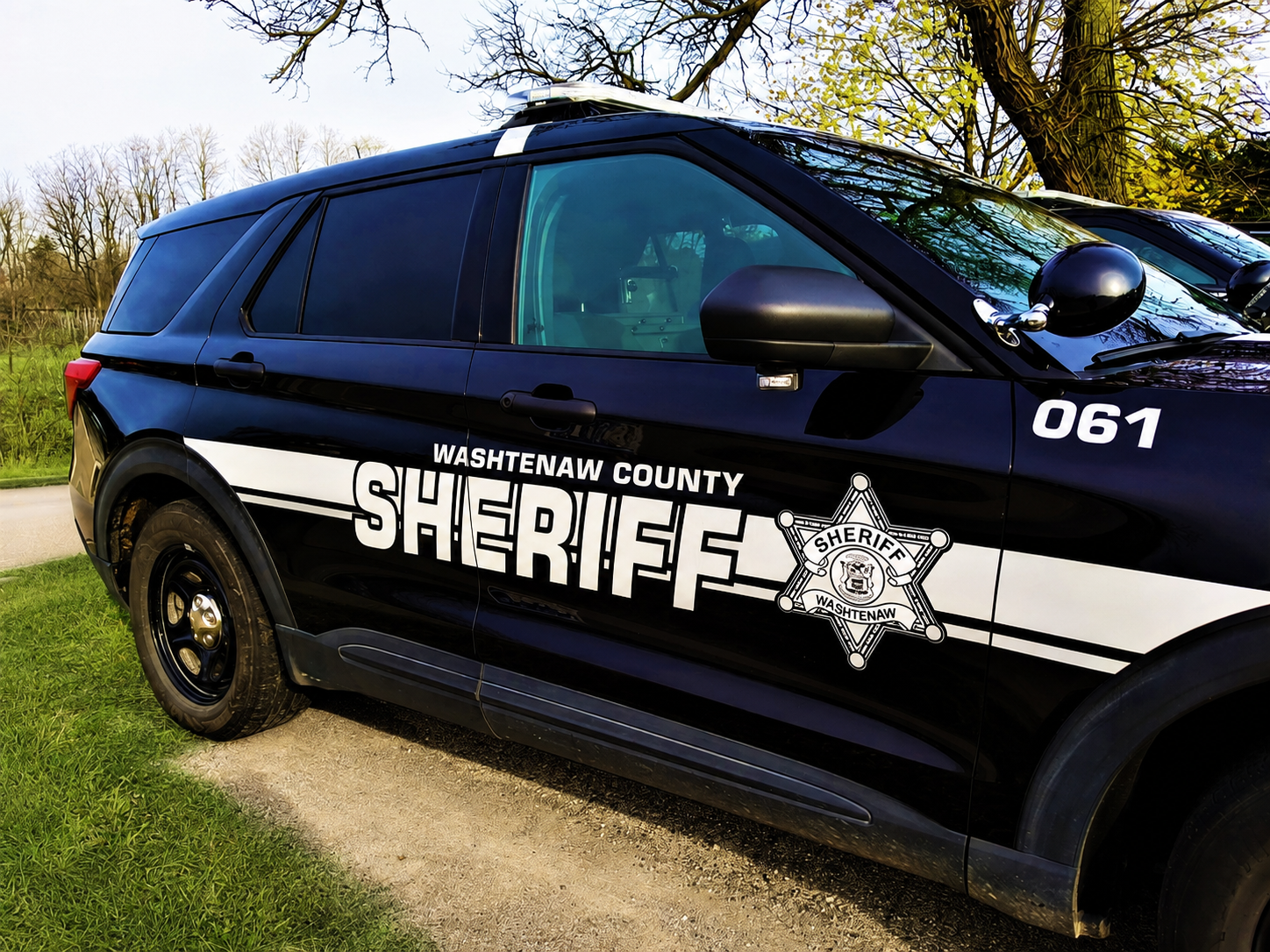
Sheriff Alyshia M. Dyer said a possible increase in the county’s monthly 911 surcharge could improve that coordination, support new technology and bring mental health professionals into the 911 center.
“You want to send the right response to the right person,” Dyer said.
Dyer said the Washtenaw County Board of Commissioners could vote Aug. 5 on whether to place a surcharge question on the November ballot. No ballot language, increase or final monthly rate has been approved.
What Residents Could Pay

Washtenaw County currently charges 43 cents per month for each telephone, wireless or internet-based phone line. The surcharge appears on monthly phone bills, not property tax statements, and has remained at 43 cents since July 2013.
If the question reaches the ballot, voters could be asked to authorize a surcharge of up to Michigan’s limit of $3 per line per month. Voters would not choose the final charge.
If the measure passes, the county would hold a public hearing before commissioners set the rate. The Sheriff’s Office estimates an initial rate could fall between $2 and $2.50 per month, although no amount has been formally proposed.
At $2.50 per line, a household with two phone lines would pay $5 per month, compared with 86 cents now.
How 911 Works Now
Metro Dispatch, operated by the Sheriff’s Office, handles police dispatch for most of Washtenaw County. Chelsea, Eastern Michigan University and the University of Michigan operate their own dispatch centers.
Fire and emergency medical calls are generally transferred to Huron Valley Ambulance, one of several nonprofit EMS providers operated by Emergent Health Partners. If a caller needs both police and medical help, Metro Dispatch may send police before transferring the call for fire and EMS dispatch.
Dyer said some fire departments have asked for a greater role in planning and closer coordination with Metro Dispatch. Any changes would require agreement among the municipalities, departments and agencies involved. No consolidation plan has been proposed.
Across Washtenaw County, dispatch centers answered 241,966 emergency calls in 2025.
Metro Dispatch had a 2025 operating budget of about $6.7 million and received about $1.61 million from the local surcharge. Municipal contracts, state funding and county general fund dollars cover the remaining costs.
Dyer said a higher surcharge could reduce or eliminate what communities such as Milan pay for Metro Dispatch contracts. Residents would not receive a direct refund, but municipalities could have more money available for other local needs.
Chelsea Would Keep Local Control
Dyer said raising the surcharge would not take away Chelsea’s locally operated dispatch center or force any municipality to join Metro Dispatch.
Communities operating their own qualifying centers could also receive additional surcharge revenue.
“Chelsea residents, they love their dispatch center,” Dyer said. “We are not trying to change anything if people don’t want to. It’s totally up to the local municipalities.”
Mental Health Support at the First Call
Additional funding could also place Community Mental Health professionals or social workers inside the 911 center to help evaluate behavioral health calls.
Washtenaw County Community Mental Health already operates a free, 24-hour crisis line at 734-544-3050. Dyer said people in crisis often call 911 without knowing about the separate service or may not want to be transferred.
Dispatchers “do a phenomenal job,” she said, but they are not mental health professionals. Having trained staff in the center could help determine whether a caller needs police, fire, EMS, a social worker or another responder.
Additional revenue could also support staffing and Next Generation 911 technology, which can receive texts, photos, video and improved location information.
What Happens Next
If voters reject an increase, the 43-cent rate would remain. Dyer said the Sheriff’s Office plans to hold community discussions if commissioners move the proposal forward.
“Whether they support it or whether they don’t support it,” she said, “I want them to know what it is.”
Correction: An earlier version of this article incorrectly described Emergent Health Partners as formerly Huron Valley Ambulance. Huron Valley Ambulance is one of several nonprofit EMS providers operated by Emergent Health Partners.






 114 North Main St Suite 10 Chelsea, MI 48118