

Meeting Becomes a Flashpoint
A regular Ypsilanti Township Board of Trustees meeting became the latest flashpoint in the fight over the proposed University of Michigan and Los Alamos National Laboratory research computing center.
The June 16 agenda listed a general legal update from the township attorney. But that update, followed by public comment, quickly turned into a broader discussion about local control, environmental justice, water and sewer capacity, and whether township officials have enough power to slow or stop a university-backed project.
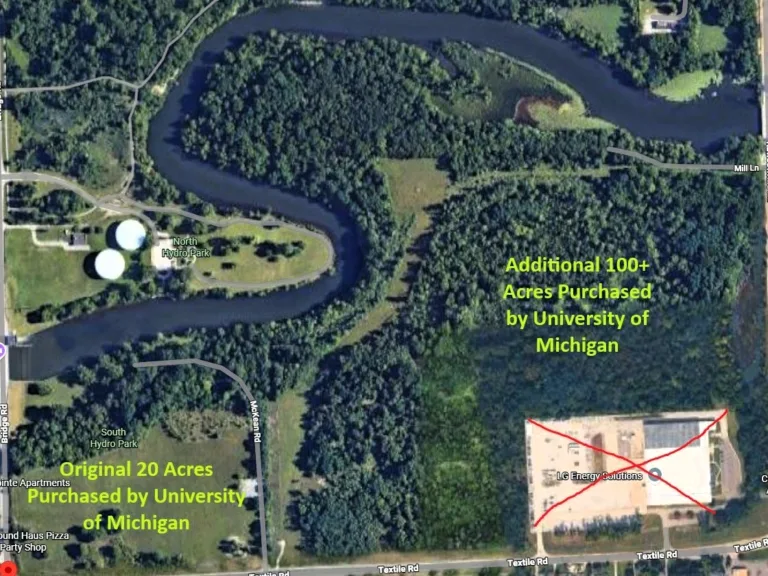
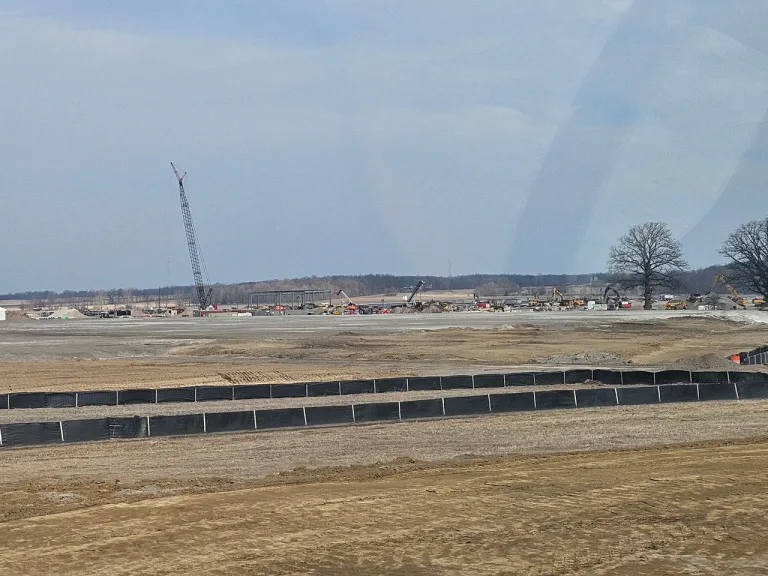
U-M has not announced a final site for the facility, but the university has purchased a 124-acre parcel on Textile Road in Ypsilanti Township as part of its ongoing site evaluation. Earlier reporting has also identified a second possible site west of Willow Run Airport.
Township officials and residents said they have spent nearly a year raising concerns about the U-M/Los Alamos proposal. Now, they say they need help from county, state and federal officials.
“We have written letters. We have adopted resolutions. We’ve had meetings,” Supervisor Brenda Stumbo said. “Regardless of what we do, no one will help us. No one who has the power to help us.”
Stumbo said two previous public meetings on the issue each drew more than 150 people, including one during a snowstorm.
“This is going to harm our community and our future,” she said. “We will fight to our very last breath to fight that, but we need help.”
Limited Local Tools
Ypsilanti Township has created a public information page for residents, saying officials share community concerns about the proposed U-M/Los Alamos “data center” project and are working to protect residents.
The township says its Board of Trustees unanimously adopted a resolution opposing Los Alamos National Laboratory siting a nuclear research facility anywhere in the township. It also says U-M is exempt from township zoning laws and does not pay property taxes, limiting the township’s local authority.
One of the township’s most significant tools has been water and sewer service. In April, the Ypsilanti Community Utilities Authority approved a 12-month moratorium on new water and sewer service commitments for data centers, artificial intelligence computing facilities and high-performance computing centers.
The pause gives YCUA time to study possible effects on water supply, wastewater capacity, customer rates, infrastructure costs, environmental review and emergency response planning.
U-M has pushed back on that approach. MLive and Bridge Michigan have reported that the university warned of possible legal action over the moratorium, arguing that utility service decisions must be based on water quality or documented capacity concerns.
What the Project Is
U-M has disputed the township’s framing of the project. The university says the facility would be a high-performance computational research center, not a commercial data center, nuclear production site or military installation. U-M says there would be no hazardous nuclear materials, no plutonium pits, no manufacturing and no role in real-time defense operations at the site.
But U-M’s own project information also says Los Alamos work at the center would include national security, nuclear stewardship and classified research. U-M describes nuclear stewardship as advanced computational modeling used to help ensure the safety and reliability of the nation’s existing nuclear stockpile without live testing.
Township attorney Wm. Douglas Winters framed the issue as one rooted in environmental justice and the divide between eastern and western Washtenaw County. He argued that Ypsilanti Township is being asked to carry risks that would not be accepted in Ann Arbor.
“This township board needs help,” Winters said. “Unlike what they think of you, this board knows that each of you matter.”
Debate Moves Beyond Township Hall
Several residents at the June 16 meeting urged township officials to keep searching for legal, utility and infrastructure tools to slow the project. Others called for broader organizing across communities facing similar proposals.
Some residents also criticized U.S. Rep. Debbie Dingell, Washtenaw County Commissioner Justin Hodge and Washtenaw County Commissioner Annie Somerville, saying officials outside the township have not done enough to help.
That criticism has prompted public responses. Hodge defended Somerville, saying she has been unfairly scapegoated for a project she has worked to place guardrails around. Somerville, whose district includes Ypsilanti Township, has pointed to her voting record, saying she supported county actions opposing data center tax exemptions, encouraging local moratoriums and backing efforts to rescind the $100 million state grant for the U-M/Los Alamos project.
Since the meeting, the dispute has continued on several fronts.
On June 24, Dingell sent a letter to University of Michigan and Los Alamos National Laboratory leaders, asking them to directly answer community concerns about the proposed project by July 10. Her questions focused on nuclear weapons research, energy and water demand, noise, public safety, emergency response, tax-exempt status, possible sites, community benefits and transparency.
That same day, state Reps. Jimmie Wilson Jr., Jason Morgan and Morgan Foreman announced legislation aimed at limiting U-M’s ability to buy land without following local zoning rules and ordinances. The proposal was prompted in part by U-M’s purchase of land in Ypsilanti Township for the proposed Los Alamos project and its purchase of the former Concordia University campus in Ann Arbor.
The legislation includes a proposed constitutional amendment that would require the U-M Board of Regents to follow local ordinances and zoning requirements for land acquired after 2027. Two related bills would change state zoning law and the 1851 statute governing the university to require compliance with local zoning rules.
In a public post, Morgan said the proposal is meant to give local residents and elected officials “a real seat at the table” when the university buys land in local communities.
Ypsilanti Township has also continued pushing back publicly. The township posted a June 24 update from Winters, who said he had sent the Board of Trustees a letter responding to statements made by Hodge on Facebook. Winters said he removed the attorney-client label from the letter so the board could post it publicly with related attachments.
Winters wrote that residents continue to say they do not know what is happening with the data center proposals. He said the letter was intended to show the township board’s efforts to seek support from county, state and federal officials.
For Ypsilanti Township, the immediate question is what happens when local officials oppose a university-backed project but have limited zoning and tax authority over it.
Taken together, the latest developments show the fight is no longer only about whether the U-M/Los Alamos proposal is a data center, a research facility or something else. It is also about who gets answers, who has authority and whether local communities have enough tools before major decisions are already in motion.













 114 North Main St Suite 10 Chelsea, MI 48118