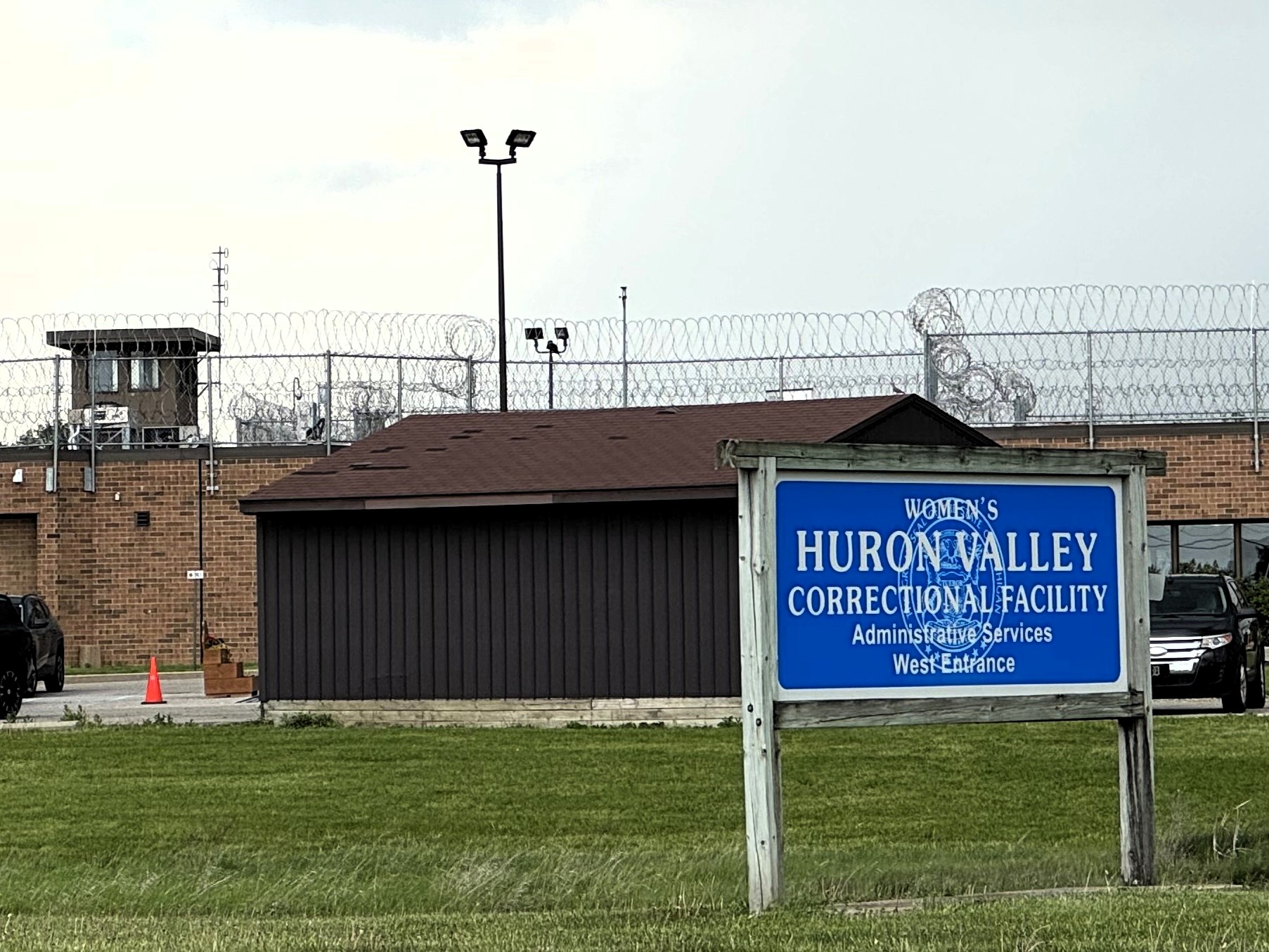



New autopsy findings provide the first official explanation for the June 6 death of Ashley Hoath, one of four women incarcerated at Women’s Huron Valley Correctional Facility to die this year.
Hoath, 36, died at Trinity Health Hospital several hours after being transferred from the prison’s medical unit.
The Michigan Department of Corrections said it received the results from the Washtenaw County Medical Examiner on July 16 and released an update July 17.
The medical examiner ruled that Hoath died by suicide from acute salicylate toxicity, or aspirin toxicity.
The finding explains how Hoath died, but not what happened before she reached the hospital or whether prison procedures were followed.

Hoath’s daughter, Anala, previously told WDIV that other incarcerated women said they raised concerns about her mother’s condition and tried to get her medical attention before she collapsed.
MDOC did not provide additional information about when staff first became aware Hoath was ill or how they responded.
Questions also remain about how Hoath obtained the medication involved.
MDOC said medications are available to incarcerated people in several ways. Some nonprescription medications may be purchased through the commissary. Others require approval from a health care provider or must be administered in the presence of medical staff.
The department did not say whether the medication Hoath ingested came from the commissary, was prescribed or was obtained another way.
MDOC’s internal investigation, a Michigan State Police investigation and a mortality review remain underway.
Hoath was the third woman incarcerated at Women’s Huron Valley to die between May 13 and June 6. Khaira Howard, 28, died May 13, followed by Rebecca Fackler, 57, on May 17.
Dalephenia Jones, 62, died July 2 after spending nearly two weeks in the hospital following what MDOC described as a cardiac event.
Howard’s death was attributed to a pulmonary thromboembolism caused by a blood clot that traveled to her lung. Autopsy findings for Fackler and Jones have not been publicly released.
The deaths have renewed scrutiny of health care, staffing and living conditions at Michigan’s only prison for women. Those concerns predate the recent deaths.
After a House Oversight Committee hearing in February, state Rep. Reggie Miller wrote that testimony reinforced concerns about health care, disability accommodations and other conditions at the prison.
“Women shouldn’t die in prison,” Miller wrote, adding that the state “must do better.”
MDOC says independent testing found no dangerous systemic black or toxic mold at the facility and that incarcerated people receive a community standard of medical care.
The department said investigations into the other recent deaths remain open. Additional clinical leadership has been brought to the facility, and MDOC is developing a health care staffing plan that includes enhanced nursing management.
Hoath’s autopsy report has been posted on MDOC’s Transparency and Action website.
Help is available for anyone experiencing emotional distress or thoughts of suicide. Call or text 988 to reach the 988 Suicide & Crisis Lifeline.











 114 North Main St Suite 10 Chelsea, MI 48118