




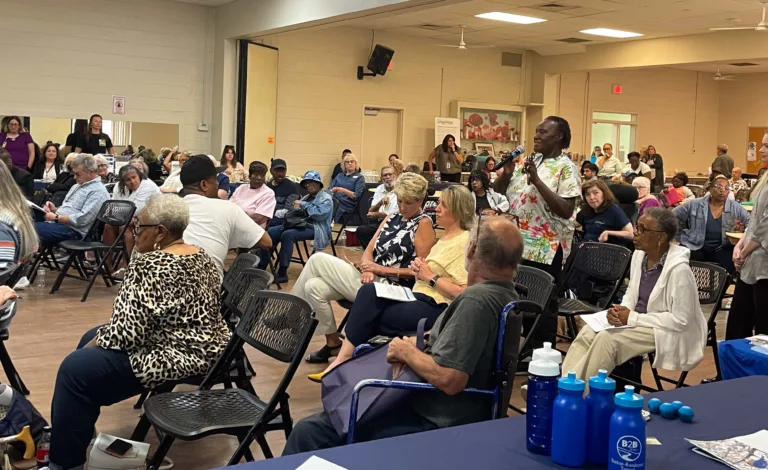
This summer the U.S. Environmental Protection Agency (EPA)is inviting community members to one-on-one listening sessions so the agency can learn how residents want to be informed and engaged, identify information and resource gaps, and educate the community about EPA, the site and the Superfund program.
Earlier this year, the EPA added the former Gelman Sciences site in Scio Township to the Superfund National Priorities List (NPL) due to groundwater contamination from 1,4-dioxane.
These interviews with residents will help develop a Community Involvement Plan (CIP,) which the EPA said is a site-specific strategy to enable meaningful community involvement throughout the entire Superfund cleanup process. The CIP specifies EPA-planned community involvement activities to address community needs, concerns, and expectations that are identified through community interviews and other interactions early in the process.
Meetings will be held at several locations in July and August:
July 8-10 at the Ann Arbor District Library: Westgate Branch, 2503 Jackson Avenue in Ann Arbor
July 27-29 at Skyline High School, 2552 N. Maple Road in Ann Arbor
August 17-19 at Scio Township Hall, 827 N. Zeeb Road
To schedule a one-on-one meeting, contact EPA contractor Caeli Cleary at 312-201-7769 or at [email protected]. You can schedule a 30 to 60 minute interview during one of those dates and locations, available both day and evening.
Gelman Plume
In giving some background, the EPA said from 1963-1986, “Gelman Sciences Inc. manufactured medical filters, a process that discharged wastewater containing 1,4-dioxane into surrounding ponds creating a contaminated groundwater plume. Health risks of 1,4-dioxane include liver and kidney damage and cancer. The 1,4-dioxane groundwater plume is approximately 3 miles long and 1 mile wide and has migrated into aquifers that supply drinking water. Currently, the company has an agreement with the state requiring them to pump and treat contaminated groundwater to lower the concentration of 1,4-dioxane within the plume, prevent groundwater use in contaminated areas, prevent well use within the plume, and connect affected properties to municipal water.”
The EPA said the agreement does not require Gelman to restore the groundwater to beneficial use and allows the plume to migrate toward, and discharge to, the Huron River in compliance with the state’s groundwater to surface water interface criterion.
“With this NPL listing, EPA can take action to more effectively control the plume to reduce eastern migration and further degradation of the Ann Arbor aquifer and ensure uncontaminated portions of the aquifer can be used for future commercial and/or residential use,” the EPA said in their statement when listing the site.
The EPA said “Although there is currently no known human exposure, conditions at the site present a threat because of the potential for the plume to migrate and contaminate the Huron River and drinking water wells. 1,4-dioxane exceedances in private wells have already resulted in residential drinking water wells to be abandoned and residents to tie into municipal supplied water lines. In 2001, the city closed their municipal drinking water well, known as the Montgomery Wellfield, due to the presence of 1,4-dioxane.”
According to the Washtenaw County Health Department, 1,4-dioxane “is a man-made compound that mixes easily in water. It is used in industry as a solvent to manufacture other chemicals, and it is a by-product in many items, including paint strippers, dyes, greases, antifreeze and aircraft deicing fluids. It is also found in other chemicals that are used to manufacture cosmetics, detergents, deodorants and shampoos.”
Contamination Area
According to the Washtenaw County Health Department, there is an area in Washtenaw County “where a 1,4-dioxane plume is underground.”
“A plume is a volume of contaminated groundwater that extends downward and outward from a source,” the county health department said on their webpage. “The 1,4-dioxane plume is moving through groundwater; the direction and speed of the contamination plume is affected by the local geology. The plume area includes parts of Scio Township and western Ann Arbor. This contamination is a concern because wells near the area draw groundwater for use in homes and businesses.”
There are currently over 250 monitoring wells located in and around the plume that are used to track water levels and 1,4-dioxane concentrations.
Going Forward
Questions can also be directed to Diane Russell, EPA’s community involvement coordinator, at 989-395-3493 during the weekday hours of 9:30 a.m. to 5:30 p.m. or at [email protected].
More information can be found at https://www.washtenaw.org/14-dioxane or www.epa.gov/superfund/gelman
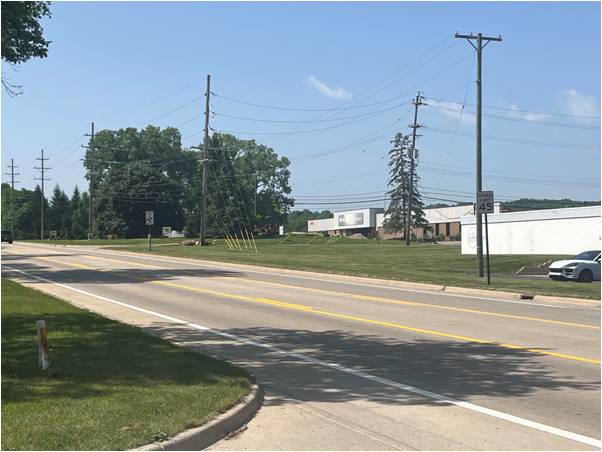
Photo: Looking over at the former location of Gelman Sciences on Wagner Road. Photo by Lonnie Huhman








 114 North Main St Suite 10 Chelsea, MI 48118