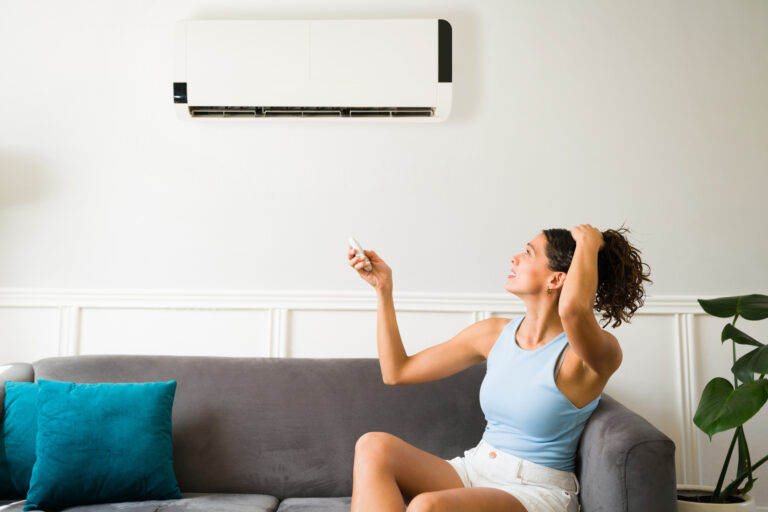
When your AC quits during a heat wave, start here — simple checks for the thermostat, filter and outdoor unit before you call a pro, plus what the 2025 refrigerant change means for repairs.
A failing air conditioner during a humid Michigan summer is miserable — but the cause is often something simple you can check yourself in about fifteen minutes, long before a repair truck could arrive. Before you call for AC repair, run through this checklist.
One important tip up front: if your system is running but blowing warm air, don’t keep running it. Continuing to run a struggling AC can turn a small, cheap problem into an expensive compressor failure.
| AC still not cooling? Reach a licensed, insured local HVAC tech 24/7: Call (734) 280-2212 (available 24/7) |
1. Check the thermostat first
Set it to COOL and put the fan on AUTO, not ON. This matters more than people realize: with the fan on ON, it runs constantly and blows room-temperature air whenever the system isn’t actively cooling, which feels exactly like the AC has failed. Then lower the setpoint a few degrees and listen for the system to kick on. If the display is blank, replace the batteries.
2. Replace a dirty air filter
A clogged filter restricts airflow, weakens cooling, and can cause the indoor evaporator coil to freeze into a block of ice. Check the filter first — a fresh one is the single easiest fix, and it’s often the whole problem.
3. Clear the outdoor condenser unit
Head outside to the condenser unit. Clear away leaves, grass clippings, cottonwood fluff and debris, trim back any plants to give it about two feet of clearance on all sides, and gently rinse the metal fins with a garden hose if they’re dirty. A condenser smothered in debris can’t shed heat, so the system can’t cool the house no matter how hard it runs.
4. Check the breaker and outdoor disconnect
Central air conditioning usually has its own circuit breaker, and there’s often an outdoor disconnect box mounted near the condenser. Make sure neither has tripped or been switched off. If the breaker trips again after you reset it, stop — that’s an electrical issue for a pro.
5. Look for a frozen coil
Ice on the refrigerant lines or the indoor unit means airflow or refrigerant is the problem.
| Safety: If you see ice, turn the AC off and set the thermostat fan to ON to help the coil thaw — running a frozen system can damage the compressor. Replace the air filter while you wait. If the coil freezes again after thawing, you have an underlying airflow or refrigerant problem that needs a technician. |
6. Refrigerant and compressor issues need a licensed pro
If the system runs but won’t cool, hisses, short-cycles, or you suspect low refrigerant, stop here. Refrigerant is federally regulated and may only be handled by a licensed technician, and a failing compressor is never a DIY repair. A typical recharge of an existing system runs about $100 to $400 — but low refrigerant usually means a leak that needs to be found and fixed, not just topped off.
What the 2025 refrigerant change means for you
There’s a wrinkle worth knowing if your AC is older. As of 2025, manufacturers can no longer produce new systems that use R-410A, the refrigerant in most existing home AC units, under the federal AIM Act. New systems now use lower-emission refrigerants like R-454B.
Your current R-410A system is fine to keep and can still be serviced — but as supply tightens, R-410A is expected to get more expensive, which makes a big refrigerant repair on an old unit less economical over time. If your AC is 12 to 15-plus years old and facing a costly refrigerant or compressor repair, it’s worth getting a quote on replacement alongside the repair. New A2L-refrigerant systems run roughly 10 to 15 percent more than the older equipment did, so there’s no need to panic-replace a healthy unit.
| Want it handled fast? A licensed, insured local HVAC tech is one call away. Call (734) 280-2212 (available 24/7) |
Prevent breakdowns with simple maintenance
Most summer AC failures are preventable. Change the filter regularly, keep the outdoor unit clear, and schedule a professional tune-up each spring before the first heat wave. A tune-up catches low refrigerant, weak capacitors and dirty coils before they leave you sweating on the hottest day of the year.
Summer habits that cut bills and breakdowns
A few habits ease the load on your system through the worst of the heat. Use ceiling fans so you’re comfortable at a slightly higher thermostat setting, close blinds on sun-facing windows during the day, and let the temperature drift up a few degrees when no one is home. Keep supply and return vents clear, and change the filter monthly in peak season. Less strain on the system means fewer mid-summer failures — and a lower electric bill.
Signs you need a new AC, not just a repair
Sometimes a repair is throwing good money after bad. Lean toward replacement if several of these are true:
- The system is 12 to 15 years old or older and needs a major repair
- It runs on R-410A and faces a costly refrigerant leak or compressor failure
- Energy bills are climbing and some rooms never cool evenly
- You’ve paid for repairs in multiple recent summers
Why bigger isn’t better
When you do replace, resist the temptation to oversize ‘to be safe.’ An air conditioner that’s too large short-cycles — it cools the air quickly but doesn’t run long enough to pull humidity out, leaving a Michigan home cold and clammy — and the frequent starts wear out the compressor. A proper load calculation, not a rule of thumb, gets the sizing right for your home.
When to call an HVAC pro
Call a professional if the basics don’t restore cooling, the unit keeps freezing, the breaker keeps tripping, or you hear or smell anything unusual. In a Michigan heat wave — especially for households with older adults or young children — cooling is a health issue, not just comfort. The Sun Times News keeps a 24/7 line to vetted local HVAC techs serving Chelsea, Dexter, Saline and Milan.
Frequently asked questions
Why is my AC running but not cooling?
Common causes are a dirty filter or condenser, a thermostat set to fan ON, a frozen evaporator coil, or low refrigerant from a leak. Start with the filter and the outdoor unit; if those are clear, call a technician.
Why is my air conditioner frozen?
Ice usually means restricted airflow (a dirty filter or coil) or low refrigerant. Turn the system off, let it thaw fully, replace the filter, and if it refreezes, have a pro diagnose it before running it again.
Do I have to replace my AC because of the R-410A phase-out?
No. Existing R-410A systems are fine to keep and can still be serviced. The change only stops manufacturing of new R-410A equipment, though R-410A refrigerant is expected to get pricier over time, which factors into repair-versus-replace decisions on older units.
How much does an AC recharge cost?
Roughly $100 to $400 for a typical residential recharge — but if your system is low on refrigerant, there’s almost always a leak that should be found and repaired rather than simply refilled.
How cold should the air from my vents be?
A properly working system typically delivers air noticeably cooler than the return air. If the difference is small or the air feels warm, something needs attention.
Who do I call for AC repair near Chelsea, Dexter or Saline?
For 24/7 cooling help from a licensed local HVAC tech, call (734) 280-2212.
| Comfortable home, fast. Reach a licensed, insured local HVAC tech: Call (734) 280-2212 (available 24/7) |
Last updated June 2026. This guide is general information for Washtenaw County homeowners and isn’t a substitute for professional, safety, or insurance advice. In an emergency, call 911.






 114 North Main St Suite 10 Chelsea, MI 48118