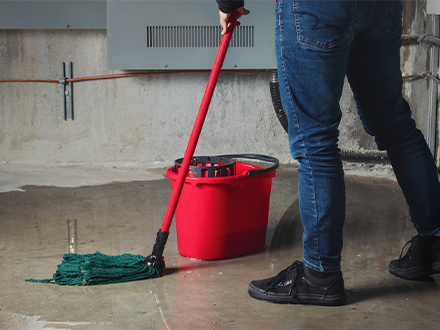
A burst pipe, a failed sump pump, or a fast-moving Washtenaw County storm can put water in your basement in minutes. Here’s exactly what to do first — and how to keep a bad day from becoming a mold problem.
Finding water spreading across your basement floor is a sinking feeling — but the next hour matters more than almost anything else you’ll do. Whether the water came from spring snowmelt, one of the heavy storms that sweep through Chelsea, Dexter, Saline and Milan, a burst supply line, or a sump pump that quit during a power outage, your response follows the same playbook.
And the stakes are real. Mold can begin to grow within 24 to 48 hours, and the average insurance claim for water-related damage runs into the thousands — often $10,000 or more once flooring, drywall and belongings are involved. The faster and smarter you act, the less you lose. Here is a calm, safe order of operations for what to do when your basement floods.
| Dealing with a flooded basement right now? For 24/7 emergency water removal, drying and cleanup from a licensed, insured local pro, call: Call (734) 264-7846 (available 24/7) |
1. Stay safe — don’t walk into standing water
Water and electricity together are deadly, and a flooded basement usually has both. Before you wade in to assess the damage, stop and look: is the water anywhere near outlets, power cords, the furnace, the water heater, or your electrical panel? If so, treat it as live until you know otherwise.
There is also a gas risk. If a gas water heater or furnace has been partly submerged, a pilot light can go out and release gas. If you smell gas, leave the house and call 911 from outside — don’t flip any switches.
| Safety: If you can reach your breaker box without standing in water, shut off power to the basement circuits. If you can’t get to it safely, leave the power on, stay out of the water, and call a licensed electrician or your utility (DTE Energy). When in doubt, stay out and let a professional make the space safe. |
2. Stop the water at its source
Figure out where the water is coming from so the situation doesn’t keep getting worse while you work.
If it’s a burst pipe or a failed appliance, shut off your home’s main water valve right away. If the water is coming up through the floor or walls during a storm, or your sump pump has failed, you usually can’t stop it mid-storm; focus on safety and getting water out. If the pump quit, see our sump pump failure guide for emergency options.
3. Identify what kind of water you’re dealing with
Restoration pros sort floodwater into three categories, and the category tells you whether it’s safe to handle yourself:
- Clean water (Category 1) — from a supply line, a faucet, or rainwater that hasn’t touched contaminants. Lowest risk, but it migrates and can degrade if it sits.
- Gray water (Category 2) — from appliances like a washing machine or dishwasher, or an overflow that contains some contaminants. Can cause illness; handle with care.
- Black water (Category 3) — sewage backups, or water that came up through the ground or storm drains. It carries bacteria and serious health hazards. Do not try to clean black water yourself.
4. Document everything before you clean up
Before you move or throw away a single thing, get out your phone and photograph and video the water line on the walls, the standing water, and every damaged item — furniture, appliances, boxes, flooring — capturing serial numbers where you can. This is what your insurance adjuster will want to see, and it’s far easier to gather now than to reconstruct later.
Whether you’re covered depends on the source. Sudden, accidental damage (like a burst pipe) is usually covered; surface flooding from a storm generally is not unless you carry separate flood insurance, and sump-pump failure often needs its own rider.
5. Start removing water and drying out — the clock is ticking
Once it’s safe and the source is stopped, get the water out as fast as you can. For a small amount of clean water, a wet/dry vacuum, a mop and buckets, fans and a dehumidifier can do the job. Pull up soaked rugs and carpet padding and move what you can to a dry area. Open windows only if the outside air is drier than the inside.
Know the limits of do-it-yourself, though. Several inches of water, water that has wicked into drywall and framing, or anything involving gray or black water needs professional extraction and structural drying. The moisture you can’t see — inside walls, under subfloor, behind baseboards — is exactly what grows mold within a day or two. This is the point where calling a pro saves money rather than costing it.
6. Call a licensed local water-damage pro
For anything beyond a minor clean-water spill, bring in a licensed, insured restoration company, and do it early. A good crew will extract standing water with truck-mounted pumps, dry the structure with commercial air movers and dehumidifiers, use moisture meters to confirm it’s actually dry (not just dry to the touch), treat the area to prevent mold, and document the loss for your claim.
Because the mold window is so short, the faster you call, the less you ultimately have to repair or replace. The Sun Times News keeps a 24/7 line to vetted local water-damage providers serving Chelsea, Dexter, Saline, Milan and the surrounding Washtenaw County communities.
| Need it dried out before mold sets in? Local crews have the pumps and meters to do it right. Call (734) 264-7846 (available 24/7) |
What to keep and what to let go
Non-porous items — metal, sealed hardwood furniture, glass, hard plastics — can usually be cleaned and saved. Porous materials that soaked up contaminated water are a different story: wet carpet padding, mattresses, upholstered furniture, and the bottom of drywall often have to go, especially after gray or black water. When in doubt, photograph it first, then ask your restoration tech — discarding too early can hurt your claim.
What professional water-damage restoration actually involves
If you’ve never been through it, professional restoration is far more than a wet-vac and a couple of fans. A crew starts with an inspection and moisture mapping — using meters, and sometimes infrared cameras, to find the water you can’t see inside walls, under flooring, and behind baseboards.
From there it’s high-volume extraction, then structural drying with commercial air movers and dehumidifiers positioned to dry the building materials themselves, not just the room air. They take moisture readings daily and keep adjusting until the structure is verified dry — then clean and apply an antimicrobial treatment to discourage mold. Throughout, they document the loss for your insurer. That combination of speed, equipment and verification is what prevents the hidden, slow-motion damage that turns a one-week problem into a months-long repair.
The health side of a wet basement
Beyond ruined drywall and flooring, standing water and lingering dampness create real health risks. Mold spores can aggravate allergies and asthma, sewage backups carry bacteria, and a chronically damp basement degrades indoor air quality for the whole house. Drying the space quickly and completely — and discarding contaminated porous materials rather than trying to salvage them — protects your family as much as your property.
Prevent the next flooded basement
Once you’re dry, a few upgrades dramatically cut the odds of a repeat — and they matter here, where spring thaw and summer storms regularly test basements near the Huron River and across low-lying neighborhoods.
- Add a battery backup to your sump pump — most basement floods happen when the same storm that drops the rain also knocks out the power
- Test your sump pump monthly and have it serviced each spring and fall
- Clean gutters, extend downspouts at least six feet from the foundation, and grade the soil to slope away from the house
- Install a backwater valve if you’ve ever had a sewer backup, and add covers to below-grade window wells
Frequently asked questions
Will homeowners insurance cover a flooded basement?
It depends on the cause. Sudden, accidental damage like a burst pipe is usually covered, while gradual leaks, neglect, and surface flooding from storms typically are not — flooding generally requires separate flood insurance. Many policies offer a sump-pump or sewer-backup rider you can add. Document everything and confirm with your agent.
How long do I have before mold grows?
Generally 24 to 48 hours, according to EPA and CDC guidance. That’s why fast water removal and thorough structural drying — not just mopping the surface — are so important.
Can I clean up a flooded basement myself?
A small amount of clean water, yes, with caution and good ventilation. Large floods, water touching electrical systems, or any gray or black (sewage or storm) water should be handled by professionals with proper extraction equipment and protective gear.
How much does flooded-basement cleanup cost?
It varies widely with the volume and category of water and how far it spread, ranging from a few hundred dollars for a minor clean-water event to many thousands once flooring, drywall and contents are affected. Fast mitigation keeps the number down.
Why does my basement flood every time it rains hard?
Common culprits are an overwhelmed or failed sump pump, poor exterior grading and gutters dumping water at the foundation, cracks in the foundation, or a high water table. A pro can pinpoint the cause and recommend fixes like a backup pump or drainage improvements.
Who do I call when my basement floods near Chelsea, Dexter or Saline?
For 24/7 emergency water removal and restoration from a licensed local pro, call (734) 264-7846.
| Every hour counts with water damage. Get a licensed, insured local crew on the way: Call (734) 264-7846 (available 24/7) |
Last updated June 2026. This guide is general information for Washtenaw County homeowners and isn’t a substitute for professional, safety, or insurance advice. In an emergency, call 911.







 114 North Main St Suite 10 Chelsea, MI 48118