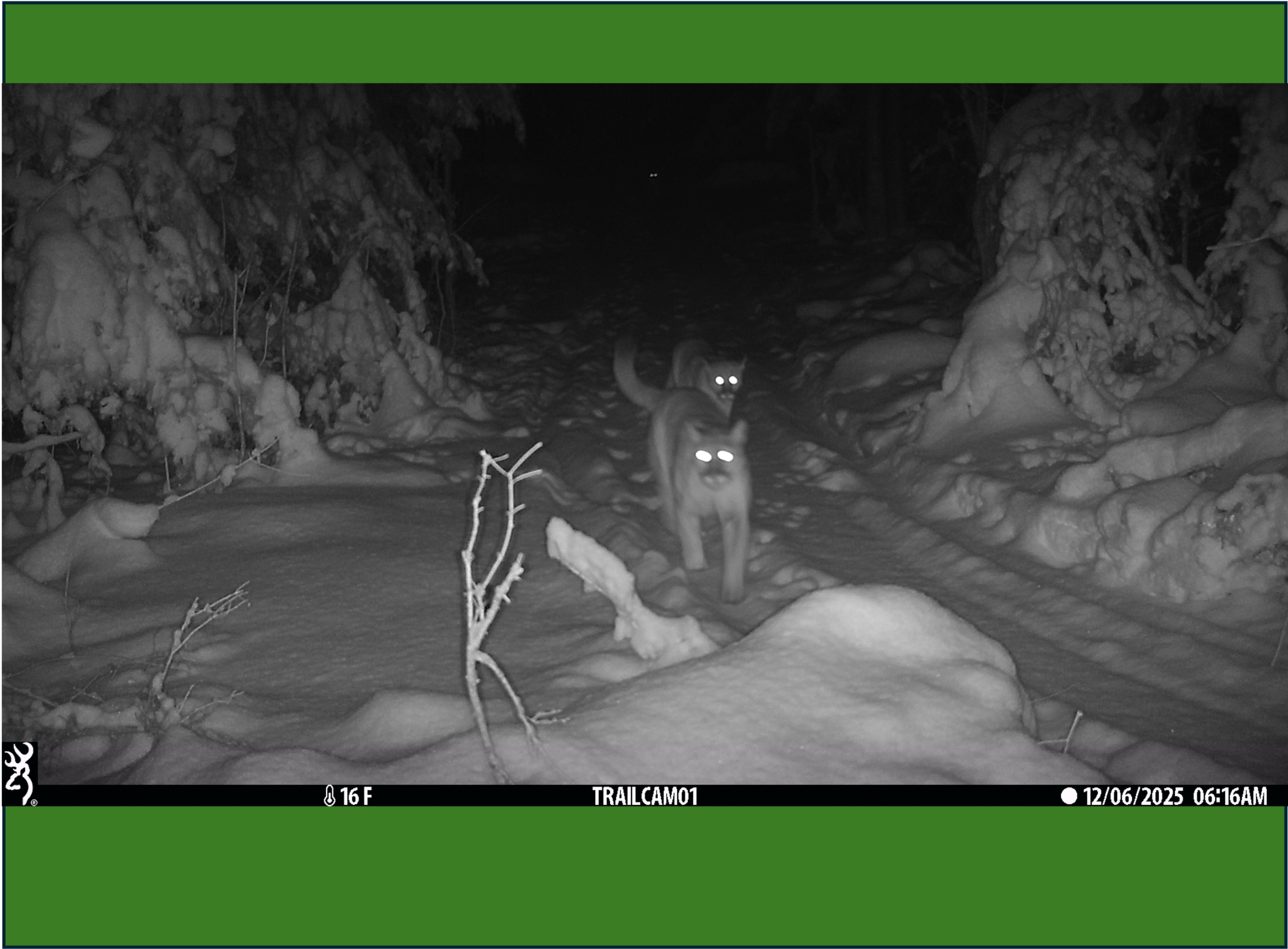
Photo: An adult cougar walks down a trail in the Upper Peninsula followed by two cougar cubs on Dec. 6, 2025. The DNR verified this photo from a private trail camera by enhancing the image to verify the existence of the three cougars, including the cub bringing up the rear ( Look for the two tiny reflective eyes in the middle toward the top). Photo courtesy of private landowner.
What began as a tantalizing peek into Michigan’s wildlife has now turned into a rare and hopeful confirmation. The cougar cubs photographed last winter in the Upper Peninsula are still alive and thriving.
Nine months after two spotted cougar cubs were first documented in Ontonagon County, a newly verified trail camera image shows the young cats walking through a snowy forest alongside their mother. The Dec. 6 photo, captured on private land in central Ontonagon County, confirms what many wildlife watchers had been cautiously hoping for. The cubs survived their most vulnerable months.
The Michigan Department of Natural Resources verified the image, which shows an adult cougar followed closely by two juvenile cougars that now appear to be about a year old.
“This is a historic confirmation for Michigan since it is the first time in over 100 years that verified cougar reproduction has occurred east of the Mississippi River and possible even east of the Missouri River,” said Brian Roell, the DNR’s large carnivore specialist.
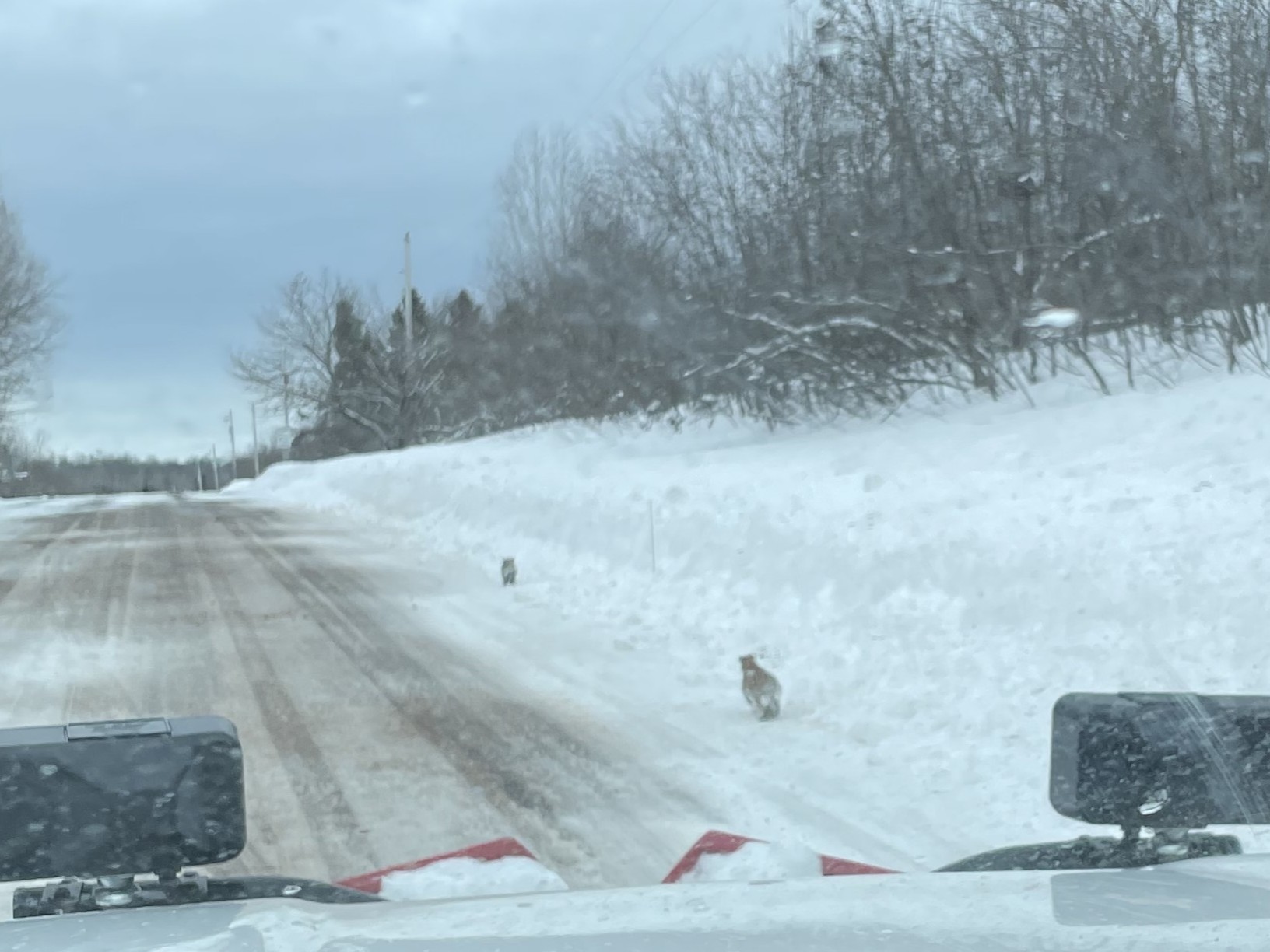
When the cubs were first photographed in early March, they were believed to be only about two months old. Notably, and concerning, their mother was nowhere in sight. That absence raised serious doubts about whether the kittens could survive on their own.
“Those young cougars are very vulnerable right now,” Roell said at the time. “We don’t know where they are or if they’re even alive. Mother Nature can be very cruel.”
Now, the mystery has taken a far more optimistic turn.
“The kittens’ chances of survival are actually pretty high because just like bears, cougars invest a lot of their energy into their young,” Roell said. “So these kittens will stay with their mom through this winter and possibly even into next winter. They already have a leg up, seeing as how they’ve been with her for a year now.”
The trail camera photo was submitted to the DNR by a private landowner on Sunday, Dec. 14. Roell visited the site the following day, and the agency’s cougar team confirmed the image Tuesday after enhancing the nighttime photo to clearly verify the presence of all three animals. The sex of the kittens remains unknown.
Despite operating more than 1,300 trail cameras across the Upper Peninsula, the DNR had no confirmed images of the cubs between March and December. A disappearance that underscores just how elusive these animals are.
“The interesting thing is, where were they for nine months?” Roell said. “That’s a mystery.”
Cougars, native to Michigan, were hunted out of the state by the early 1900s. Since 2008, the DNR has confirmed about 168 cougar sightings, nearly all in the Upper Peninsula. Many of those reports involve the same animals being seen by multiple people. Until now, genetic testing had confirmed only adult male cougars in Michigan, typically believed to be dispersing individuals from western states.
The presence of cubs changes that narrative.
“It’s pretty exciting, considering this could be the first known cougar reproduction in modern times in the western Great Lakes states,” Roell said earlier this year. “It really shows that we have a unique place in Michigan where someone has a chance to see a wolf, a moose, and a cougar in the wild. It’s something that should be celebrated, that we have the habitat to support an elusive animal like this.”
While sightings have increased in recent years, Roell cautions that the rise likely reflects the growing number of trail cameras rather than a surge in cougar numbers. In 2024 alone, more than 25% of verified cougar sightings came from DNR-operated cameras.
Even with confirmed reproduction, cougars are unlikely to ever become common in Michigan.
“This isn’t an animal that is ever going to become very numerous,” Roell said. “They’re going to remain rare on the landscape regardless of whatever happens with them here in Michigan.”
Cougars remain listed as endangered mammals in Michigan. It is illegal to hunt or harass them, including attempting to locate their dens on public or private land. Roell emphasized that human interference can do real harm.
“Too much human pressure can also trigger the female cougar to abandon her cubs,” he said. “As with all wild animals, we’re asking the public to respect their habitat and allow them to live naturally in their home.”
The DNR continues to ask the public to log credible sightings through its Eyes in the Field reporting system. For now, though, Michigan’s rare cougar family appears to be doing exactly what wild animals do best, which is staying hidden, surviving quietly, and reminding people that parts of the Great Lake State remain truly wild.




 8123 Main St Suite 200 Dexter, MI 48130