


AI data center project touts jobs, tax revenue and innovation while critics continue to question scale, energy use and rural impacts
Guests passed through two security checkpoints, presenting QR codes before entering a large tent erected beside the sprawling construction site. Behind the speakers, excavators continued work on the project that developers say will reshape both Saline Township and Michigan’s role in the emerging AI economy.
The ceremony had the feel of a high-security open house. Construction has been underway for months, but Monday marked the first time many invited guests were able to see the scale of the site firsthand and hear directly from the executives behind the project, who call it the largest private investment in Michigan history.
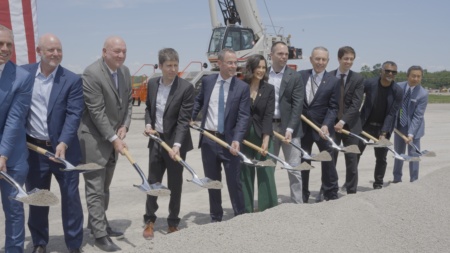
OpenAI CEO Sam Altman joined Gov. Gretchen Whitmer, Oracle CEO Clay Magouyrk, Related Companies CEO Jeff Blau and other leaders at the invitation-only event. Billed as “A Celebration of The Barn,” the gathering served as a ceremonial groundbreaking for the massive artificial intelligence data center campus already under construction in Saline Township.
Altman leads OpenAI, the company behind ChatGPT and other widely used AI tools.
“This could very well turn into the site where cancer gets cured,” said Altman, describing the potential impact of large-scale AI computing.
The development, known as “The Barn,” is being built through a partnership involving Related Digital, Oracle, OpenAI, Blackstone and Walbridge. Organizers emphasized the project’s role in advancing AI infrastructure, creating jobs and generating tax revenue, while acknowledging concerns that have accompanied the project throughout a year of public scrutiny and debate.
“We are breaking ground on the largest economic deal in Michigan history,” Gov. Gretchen Whitmer told attendees. “The Barn will be one of the most advanced AI infrastructure projects in the United States.”
“We are all fueling the need for projects like this one with the devices that we hold in our hand, or in our purse, or in our pockets,” continued Whitmer. “AI research is driving big breaks, whether it’s in science, medicine, technology, and it’s important for our national security too.”

Project Scale
Project materials distributed at the event outlined the scope of the development:
- More than $16 billion in investment before computing equipment is installed.
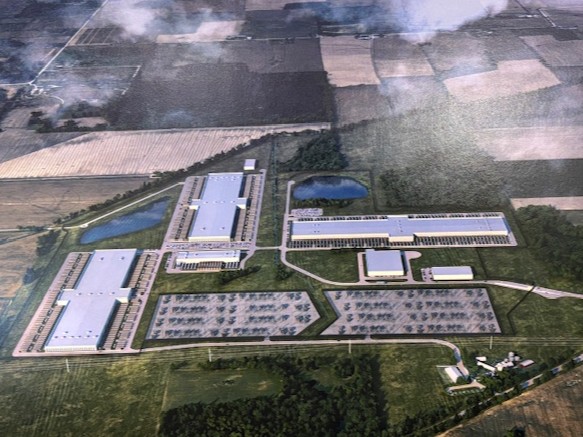
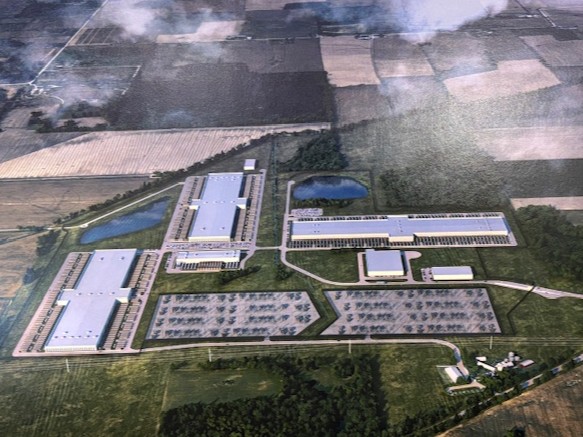
- Three data halls totaling approximately 1.65 million square feet.
- More than 2,500 union construction jobs.
- About 450 permanent on-site jobs.
- An estimated 1,500 additional jobs across Washtenaw County.
- More than $1 billion in tax revenue projected for state and local governments over time.
- More than 750 acres preserved as farmland, wetlands and open space.
Several speakers highlighted different aspects of the project.
The event brought together leaders from organizations that collectively represent the financing, construction, technology and labor behind the project.
Related Companies CEO Jeff T. Blau said the development will become “one of the largest infrastructure investments happening anywhere in the United States today.”
“What’s being built here in Saline will help power the next generation of artificial intelligence innovation and economic growth for this country,” Blau said.
Blau alsohighlighted the project’s economic impact and announced an additional $10 million community contribution for improvements at the Saline Recreation Center.
Brent Behrman, CEO of Related Digital, opened the program. Related Digital is the project developer responsible for planning and delivering the campus. Behrman emphasized community engagement and credited local residents and officials for helping shape the project.
“When you’re looking at large-scale projects like this, the only way for them to succeed is through honesty and honest conversations, sometimes difficult conversations,” Behrman said. “We had many of those open conversations with the Saline Township Board of Trustees, and the Planning Commission, and we admire and appreciate all their hard work, the desire to understand the facts of the project, the difficult decisions that they had to make, but they pursued strong protections for the community and hold us to account every day.”
Clay Magouyrk, CEO of Oracle, whose company will operate the facility’s computing infrastructure, argued that AI represents a transformative technology that will improve healthcare, scientific research and agriculture.
Other featured speakers listed in event materials included:
- Sam Altman, CEO of OpenAI, whose artificial intelligence models will rely on large-scale computing facilities such as The Barn.
- Mike Forman, global head of digital infrastructure for Blackstone Real Estate, the project’s financial partner.
- Sean McGarvey, president of North America’s Building Trades Unions, representing organized labor involved in construction.
- John Rakolta Jr., chairman of Walbridge, the Detroit-based construction firm serving as general contractor.
Community Investments Announced
In addition to the Saline Rec Center funding, developers highlighted several more community benefits included in agreements surrounding the project:
- $8 million for Saline-area fire departments.
- $4 million for farmland preservation.
- $2 million for a community investment fund.
Blau said those investments grew directly from conversations with township residents and local officials.
Addressing Criticism
While Monday’s event focused on economic development and technological advancement, the project has faced significant public opposition and concern over the past year.
Since the project was announced, township meetings have drawn packed crowds and lengthy public comment periods. Opponents have questioned whether an industrial-scale data center belongs in a rural farming community, while supporters have pointed to the project’s tax revenue, jobs and economic-development potential.
Residents and critics have raised questions about:
- The industrialization of a largely rural landscape.
- Potential impacts on farmland and community character.
- Water consumption and groundwater protection.
- Electrical demand and impacts on the regional power grid.
- Noise from data center operations.
- Traffic and infrastructure impacts.
- Whether long-term job creation justifies the project’s size.
A small group of opponents demonstrated a short distance from the event. Protesters Michael Patino and Sarah Brabbs said they remain concerned about transparency, environmental impacts, energy consumption and tax incentives associated with the project, arguing that local residents have not received sufficient answers to their questions.
Project leaders repeatedly addressed those concerns throughout the ceremony.
Behrman acknowledged that some neighbors initially approached the proposal with skepticism, but said developers sought ongoing dialogue. He specifically thanked residents who were “skeptical at first” yet engaged in discussions about the project’s details.
Josh Fraley, who lives next to the site, spoke with the Sun Times News afterwards explaining he initially reacted with skepticism when he learned of the proposal nearly a year ago. But after attending township meetings and researching the project, he concluded the farmland was likely to be developed regardless of the specific proposal. Fraley said he ultimately weighed the alternatives and decided not to oppose the project simply because he preferred farmland.
“The property wasn’t going to stay farmland,” said Fraley. “That was said countless times in all of the Saline Township meetings. It was made abundantly clear that it was going to be developed into something. It could have been a huge subdivision. It could have been a solar farm…It could have been a data center, if not this data center, a different one. It would have been something. So for us, it was weighing those options.”
Regarding water use, Oracle officials reiterated that the facility’s cooling system recirculates water rather than continuously consuming it. Magouyrk compared it to a vehicle’s engine cooling system.
Whitmer also sought to reassure critics, saying Michigan has established “strong AI guardrails on jobs, energy and the environment” and that residential electric customers would not bear the cost of powering the facility.

Looking Ahead
Construction activity is expected to continue for several years as the campus is built out. Project materials indicate the development already employs hundreds of workers on-site and draws suppliers from across the country.
“We know how complex this project is,” added Altman. “We know what the current attitude towards data centers in the world is…but maybe we can make this a great example for the future.”
Featured photo: OpenAI CEO Sam Altman speaks during a celebration and ceremonial groundbreaking for The Barn Artificial Intelligence (AI) data center project in Saline Township on June 1. The invitation-only event brought together technology executives, elected officials, labor leaders and project partners to mark progress on what developers describe as Michigan’s largest private investment. Photo by Ashley Damm











 114 North Main St Suite 10 Chelsea, MI 48118