




A dam can fade into the background for generations, part of the scenery until it becomes a repair bill, a safety concern or a decision a community can no longer put off.
Across the Huron River watershed, the Huron River Watershed Council says the issue is becoming more urgent. The council assessed 97 dams in 2025, looking at streamflow, wildlife habitat, infrastructure and whether some may be candidates for modification, removal or replacement with rock rapids.
A Complicated Choice
Daniel Brown, climate resilience strategist with the Huron River Watershed Council, said the issue is not simply whether dams should stay or go. These choices often involve public safety, river health, infrastructure, cost, history, recreation and strong attachments to familiar places.
“People are very attached to the impoundments,” Brown said.
For waterfront owners and nearby residents, those attachments can also be practical. Changes to a dam may raise questions about property access, recreation, home values, water levels and what a familiar landscape could look like afterward.
Brown said people often picture large hydropower dams or flood-control structures, but many smaller dams mainly hold water at a certain level for recreation or nearby properties. The council found most watershed dams are obsolete, relatively small or mainly used to hold water levels steady. Only four generate electricity: Barton, Superior, Ford Lake and French Landing.
The assessment ranked 13 dams as having a high chance of future modification and another 13 as moderate. Fifty-two were ranked low, often because the artificial lake upstream was surrounded by private homes.
Built for Another Time
Some dams also reflect Southeast Michigan’s industrial history, built when companies needed power close to a plant, before today’s electrical grid changed that need.
But many dams were built for a different landscape. Brown said rivers, land use and weather patterns change. Dams, by contrast, are static structures.
“Rivers are meant to be these dynamic living systems, always adapting and changing to the conditions,” Brown said. “By putting a dam, this really static thing, into a river system, you’re creating this thing that just really is incongruent with how that environment behaves.”
The council’s report says most dams in the watershed are well past their design lifetime, and many were not built with a changing climate in mind. Removing a dam can be a fast way to restore a river, reduce flood risk and make the landscape more resilient to stronger storms.
Removal Takes Planning
Still, the council notes that not every dam is a good candidate for removal. Some are tied to legal lake levels, nearby infrastructure, hydropower, recreation, private homes or other uses. The answer may be repair, operational changes, rock rapids, removal or a long-term maintenance plan.
Brown said communities sometimes fear that dam removal means a sudden flood downstream or permanent mud flats where a pond used to be. The council describes removal as a slow, planned process that can take years of investigation, engineering and restoration.
“You have to be very careful to be ready for invasive species to come in,” Brown said, adding that restoration planning is essential to give a newly restored river system “the best chance to flourish.”

Local Examples in Dexter and Ypsilanti
Dexter offers one local example. The Mill Creek dam was removed in 2008, and the council later described the project as the spark for Mill Creek Park, a downtown park with an amphitheater, trails, fishing piers and overlooks, boat access, benches and restored creek access.
Brown called Dexter Mill Creek Park one of Michigan’s stronger examples because the community envisioned what the site could become afterward.
“You go there, and it’s like this amazing place on a tributary to the Huron River,” Brown said.
The council is also working with Ypsilanti on removal of Peninsular Dam, one of the more visible current dam projects in the watershed. The city announced in December 2024 that it had secured funding, including a $7.5 million grant from the National Fish and Wildlife Foundation’s National Coastal Resilience Fund.
Ypsilanti City Manager Andrew Hellenga said in the announcement that the city has limited resources and a growing need for investment in aging infrastructure.
“Removing the dam will make room for both environmental renewal and future growth,” Hellenga said.
Costs, Safety and State Rules
The risks of aging dams are not theoretical in Michigan. In April, heavy rain and snowmelt raised concerns at the Cheboygan Lock and Dam Complex, drawing attention to dam condition, flow capacity and emergency planning.
The Huron River assessment also comes as state lawmakers consider House Bill 5485, a dam safety proposal the council says would strengthen planning, inspection and maintenance requirements; require dam owners to prove they have adequate repair funding; and reevaluate dam risk using current data, including larger storms and downstream growth.
Brown said stronger rules would likely raise the cost of dam ownership, repair and maintenance, but that reflects the true cost of aging infrastructure.
For communities, he said, the questions should start before an emergency: Who owns the dam? What condition is it in? What purpose does it still serve? What would it cost to repair, modify or remove it?
“The short version of that is like everything is going to be much more expensive than you think it is,” Brown said. “And the longer you sort of delay action or understanding, you’re just going to make it more expensive for yourself and for the community going forward.”
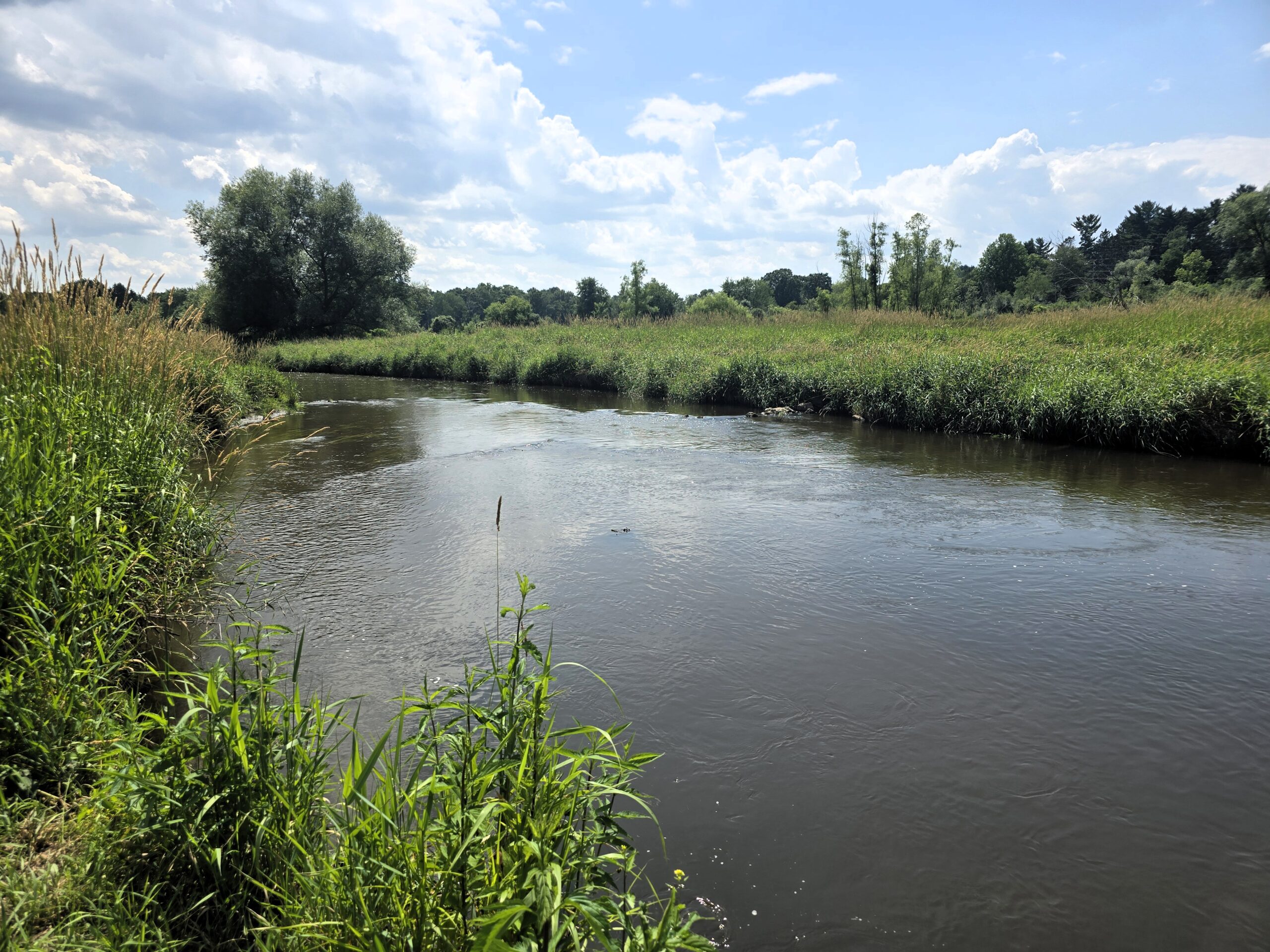
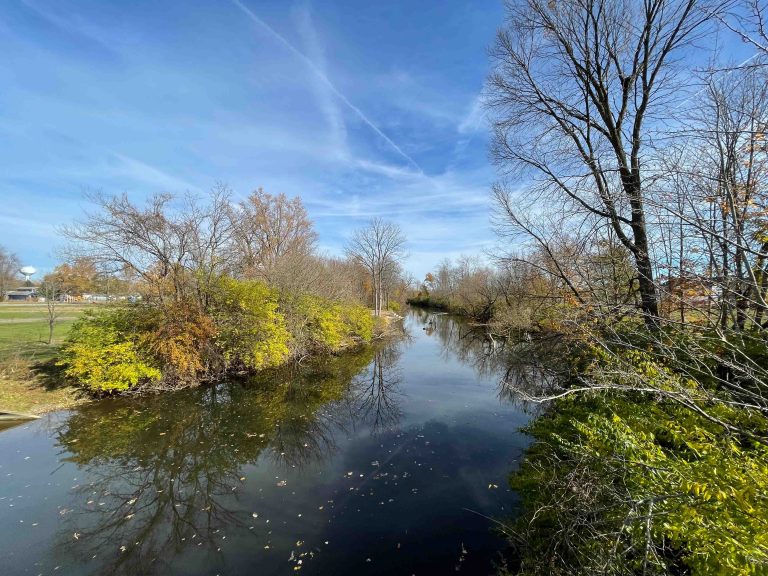
Featured image: Mill Creek flows through Dexter, one of the Huron River watershed communities included in discussions about aging dams, river health and long-term infrastructure costs. Photo by Doug Marrin











 114 North Main St Suite 10 Chelsea, MI 48118