

How a small Michigan community experienced the nation’s defining moments.
Editor’s Note: As the nation marks its 250th anniversary, the Dexter Area Historical Society presents a series exploring Dexter’s history within the broader context of state and national events. This fifth and final installment looks at several nation movements – the California Gold Rush, Prohibition, Woman’s Suffrage, and McCarthyism – and their impact on Dexter.
Dexter Residents Join the California Gold Rush
The discovery of gold at Sutter’s Creek in California in 1848 sparked the beginning of a rush to California by more than 300,000 hopeful “Forty-Niners.” Several Dexter residents were among those who tried their luck. Among them were Patrick Fleming and the Croarkin Brothers.
Patrick Fleming was an Irish immigrant who came to the United States as a child with his parents and 11 brothers and sisters. He worked for the Michigan Central Railroad, and then in 1848, he bought a small grocery store in Dexter Township. Spurred by gold fever, he sold his stock and journeyed to California. He spent 4 years there but returned with some money and built a stone home on Dexter-Pinckney Road called The Oaks, which still exists today.
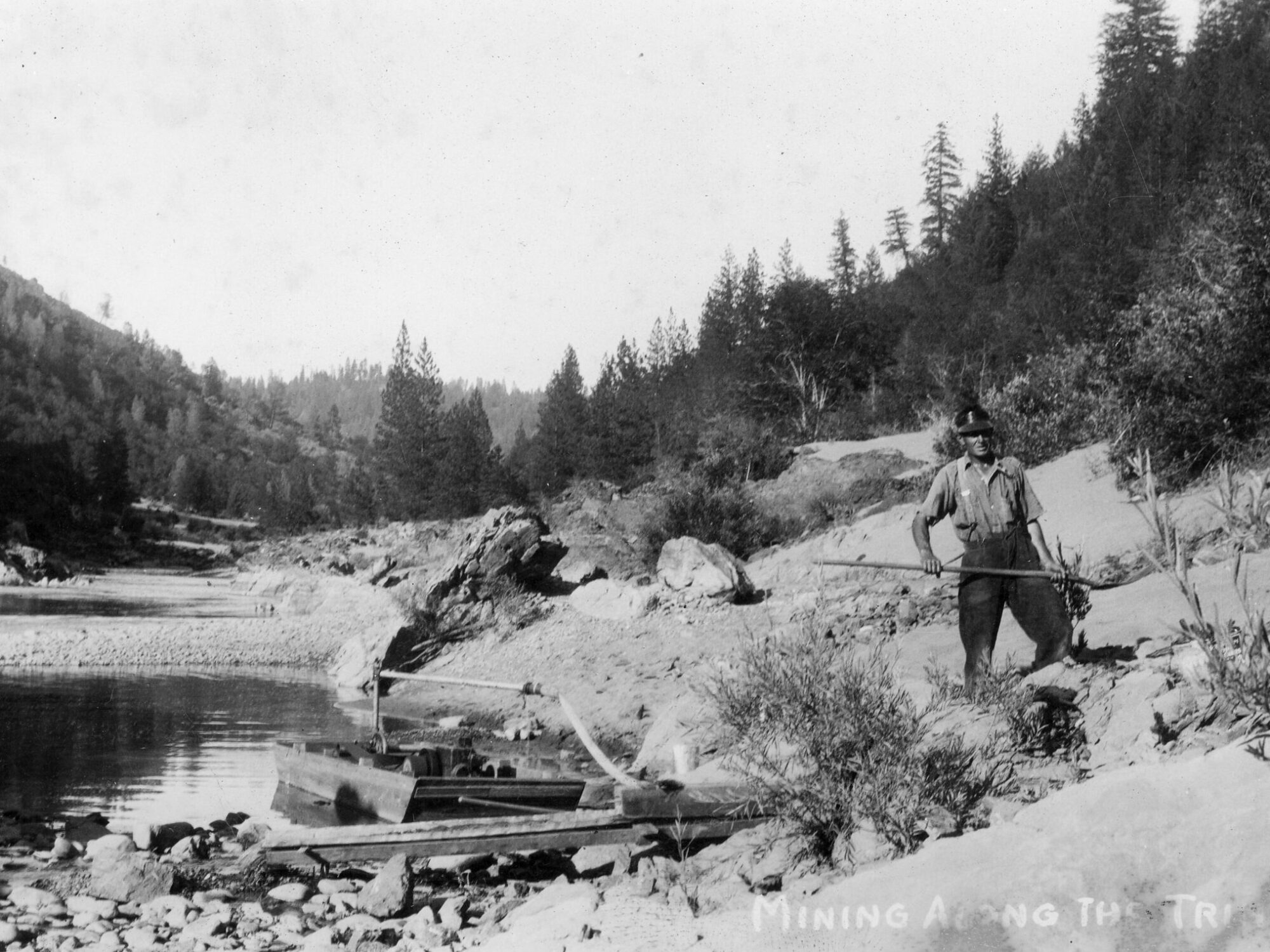
The Croarkin brothers John and Edward were also Irish immigrants. They traveled to California where they met Phillip Armour. They joined him in a successful business building sluice boxes. Their fortune made, the trio left California. Phillip moved to Milwaukee, Wisconsin, where his business ventures eventually led to the Armour Meat Packing Company. He encouraged the Croarkin brothers to join him, but John opted to return to Michigan, where he had a successful dry goods business, partnering with his son-in-law, Patrick Sloan. Edward moved to Missouri but kept a lifelong friendship with Phillip Armour.
Dexter’s Long Fight for Temperance
Long before the ratification of the 18th Amendment to the US Constitution in 1919, which prohibited the production, sale, and transportation of alcoholic beverages, Michigan and Dexter residents championed restrictions on alcohol.
Judge Dexter himself was a man of convictions and his efforts in the cause of temperance never faded. He served as president of the Michigan Temperance Society and led efforts to help those affected by alcohol. His daughters followed his example and became leaders in the W. C. T. U. (Women’s Christian Temperance Union). At a meeting in September of 1875, the Dexter Leader reported that the address to the W.C.T.U. by the Judge’s daughter Katherine Donaldson was said to be the best address ever delivered by a woman in this village.
Through the years, various local dry laws were passed throughout the state. In 1916, two years before the national amendment, Michigan voters approved a constitutional amendment prohibiting the production and sale of alcohol. Leading up to the election, the local paper was filled with advertisements for and against the measure. The voters in Washtenaw County approved the measure by a 60% margin. Local establishments offered soft drinks instead of alcohol and resorted to billiard rooms to attract customers.
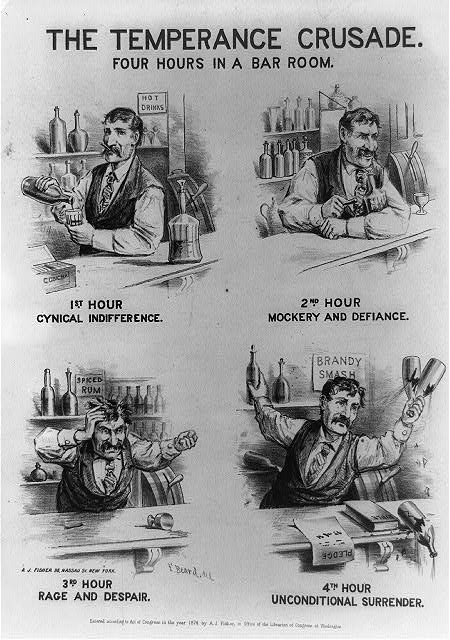
While prohibitionists believed banning alcohol would lead to a more moral and orderly society, the reality was much different. Problems soon arose due to the illegal production and smuggling of alcohol products. Enforcement of the ban was difficult, and the public became dissatisfied with the law.
In February of 1933, Congress proposed an amendment to the Constitution to repeal the alcohol ban. Unlike other amendments, it was to be ratified by state conventions rather than state legislatures. This was to ensure that the public had a voice. Michigan held an election in April of 1933 to choose the delegates to the convention.
In Washtenaw County the “wet” candidate won by a margin of 2-1. In fact, at the Michigan convention, there was only one “dry” candidate. On April 10, 1933, the Michigan convention ratified the 21st Amendment, and Michigan became the first state to do so. The amendment was officially added to the Constitution on Dec 5, 1933
Michigan Leads the Way on Women’s Voting Rights
Just as Michigan was ahead of the game on prohibition, it also led on the suffrage issue. Michigan passed an amendment to the state constitution in 1918, granting women the right to vote in any election. This was two years before the ratification of the 19th Amendment to the US Constitution, granting women the right to vote.
However, suffrage does not seem to have been an important issue in Dexter and the surrounding townships. While Ann Arbor overwhelmingly approved both the state and local amendments, the rural communities actually voted them down.
Nevertheless, Michigan was the third state to ratify the 19th Amendment to the US Constitution.

McCarthyism Comes to Dexter
In the 1950’s, there was a concern and even fear of communism. Across the country, there was talk about building bomb shelters, information on where to go in case of an attack, and how to stock bomb shelters. Schools conducted air raid drills, and local governments instituted air raid alert systems.
During all this, Joseph McCarthy, a senator from Wisconsin, led a campaign to eliminate those he deemed communist sympathizers from our government. He accused many in the government of being spies, communists, and/or security risks.

One of his targets was Milo Radulovich, a University of Michigan physics student who lived in Dexter. Radulovich was an American-born Reserve Air Force lieutenant. McCarthy accused him of being a security risk since his father subscribed to Yugoslavian newspapers and his sister openly supported liberal causes. When the Air Force stripped him of his commission, his cause was taken up by Edward R. Murrow in his See It Now television program. News cameras and reporters arrived in Dexter and interviewed his family as well as local citizens. Eventually, Radulovich was reinstated in the Air Force and Joseph McCarthy was censured by the Senate. These events are chronicled in a movie and Broadway play titled “Good Night and Good Luck.”
National Events Shape Local History
As America celebrates 250 years of history, Dexter’s past shows how national events, from revolution and reform to prosperity and conflict, were experienced one community, one family, and one generation at a time.
The Writers
A special thank you to Dexter Historical members Jan Weaver, Nancy Van Blaricum, Ceci Reicher, and Carol Jones for their research and their written articles for the 250th anniversary of the founding of our nation.
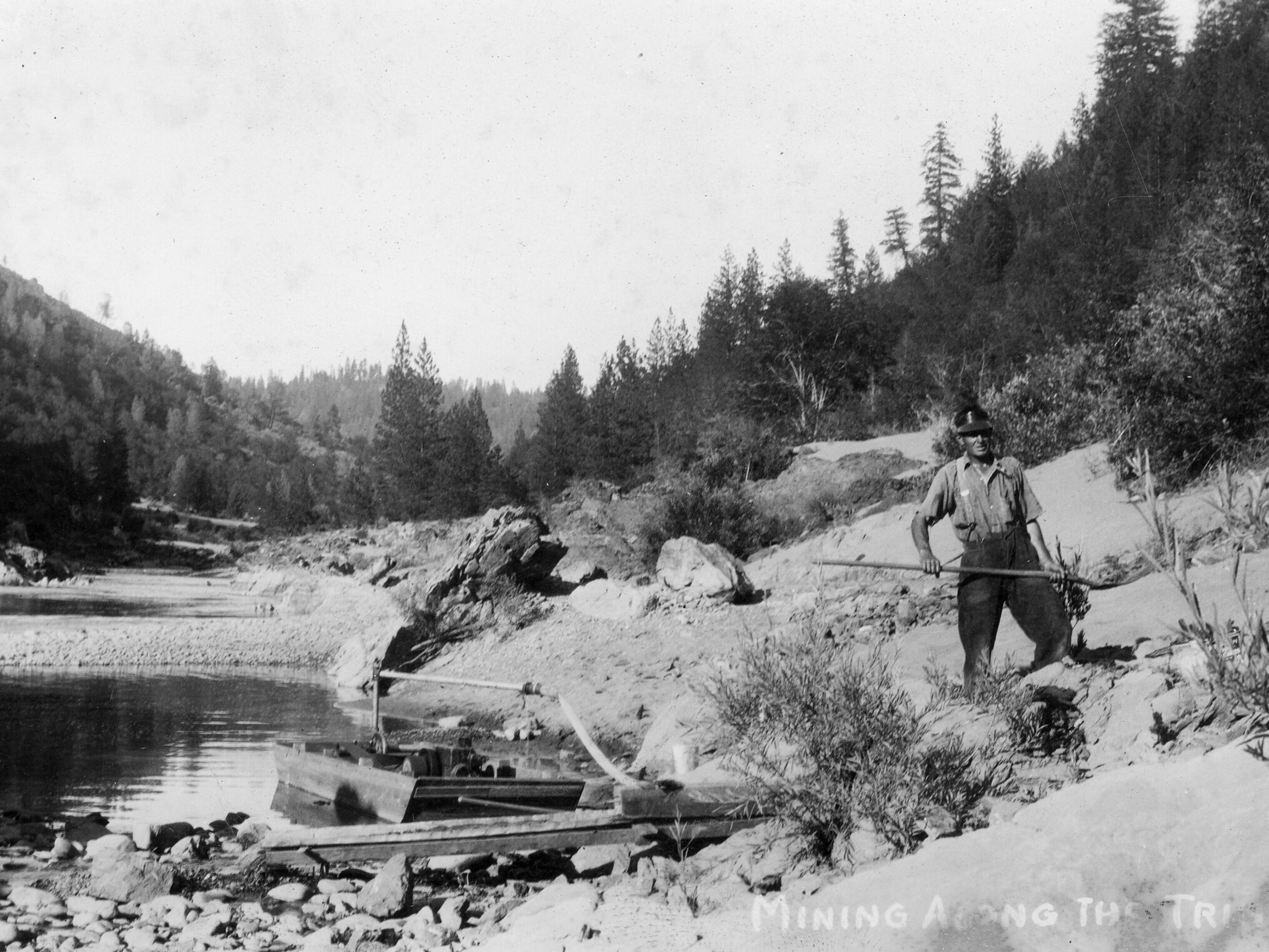
Featured photo: A miner works beside a sluice box on California’s Trinity River during the Gold Rush. The wooden sluice box, visible at the water’s edge, used flowing water to separate gold from gravel and sand. Photo courtesy of the Orange County Archives.
















 114 North Main St Suite 10 Chelsea, MI 48118