




How a small farming community learned, organized and ultimately persuaded a multinational corporation to abandon plans for an industrial biodigester, without sacrificing the relationships that held the community together.
What began with survey stakes in a farm field grew into a two-year grassroots effort that transformed neighbors into researchers, organizers and educators.
The First Clue
There was no public hearing or press release.
It began with survey stakes in a field.
Jill Hollister noticed crews working on property near her home in Freedom Township. Curious, she assumed someone might be preparing to build a house or divide a parcel.
Instead, a few internet searches led her to something few people in the township knew anything about – plans for a commercial anaerobic biodigester.

Located in southwest Washtenaw County, the township of about 1,500 residents is characterized by working farms, wooded property, glacial lakes and roads that still carry the names of families who settled there nearly two centuries ago. Many residents rely on private wells for drinking water. Neighbors know one another. Farms pass from one generation to the next.
Freedom Township Preservation Group (FTPG) member Thomas Quinn sees that history every day.
“Freedom Township was settled in the 1830s,” he says. “As far as historical records go, the farm I live on is my mother-in-law’s farmstead, and her last name, her maiden name, is Loeffler. The road to the west of my property is Loeffler. That gives you an idea of how long ago the property was settled.”
That rural history is part of what made news that an anaerobic biodigester could be built on nearby Horning Farms so jarring.

The proposed project by Vanguard Renewables would accept dairy manure along with truckloads of commercial food waste to generate renewable natural gas. Supporters of anaerobic digesters point to their role in reducing landfill waste and producing renewable energy. Residents who opposed the proposal, however, raised concerns about truck traffic, odors, emergency response, groundwater protection and the long-term environmental effects of applying digester byproducts to nearby farmland.
Across Michigan, proposed data centers, energy infrastructure and other industrial-scale developments are increasingly appearing in rural communities. Citizens often find themselves confronting projects backed by corporations with enormous financial resources and teams of attorneys, engineers and consultants. The question many ask is simple: What can ordinary people do?
Freedom Township’s answer wasn’t found in protests or political division.
It was found in organization, research and relationships.
Regular Folk Mustering Themselves
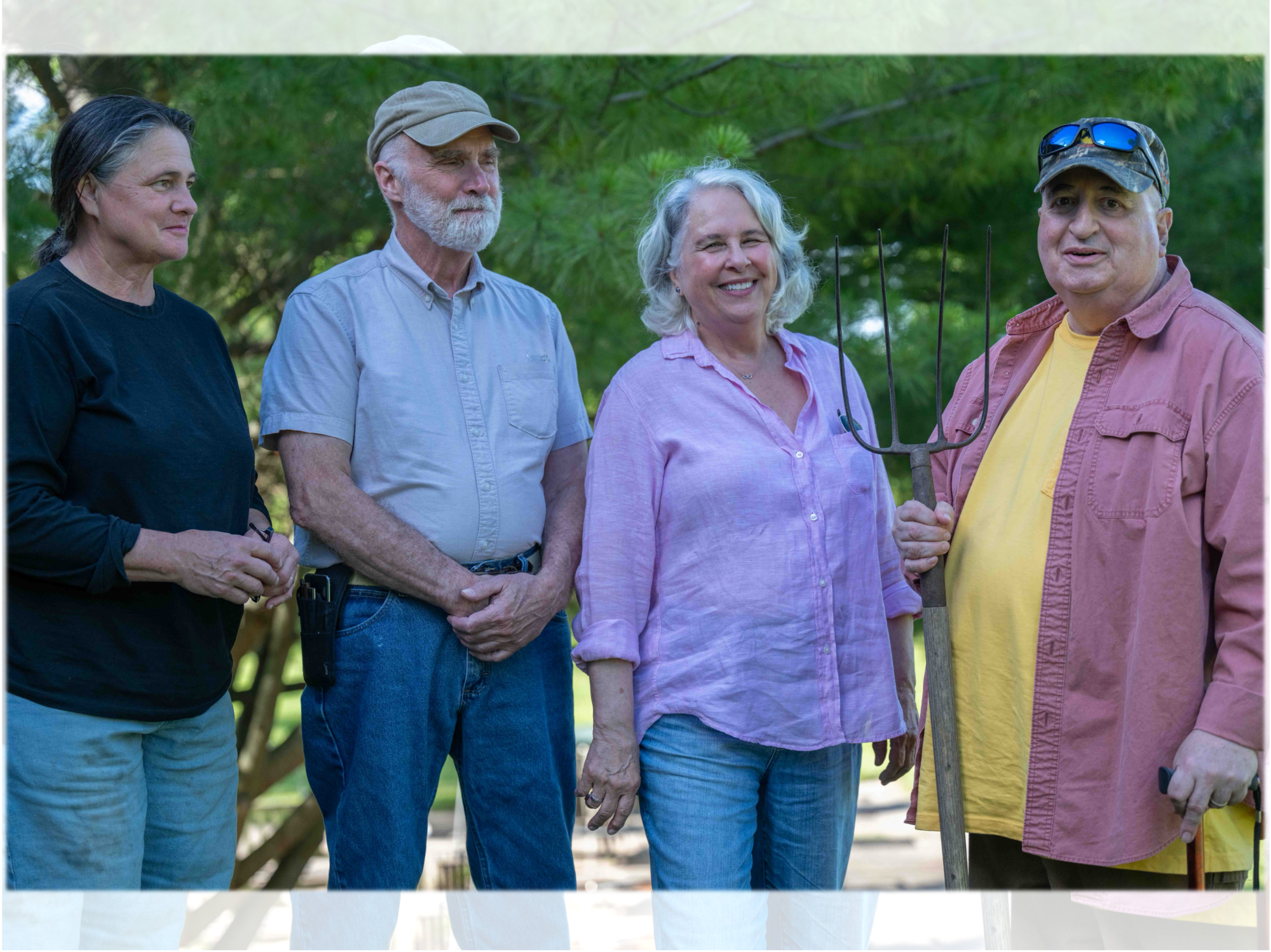
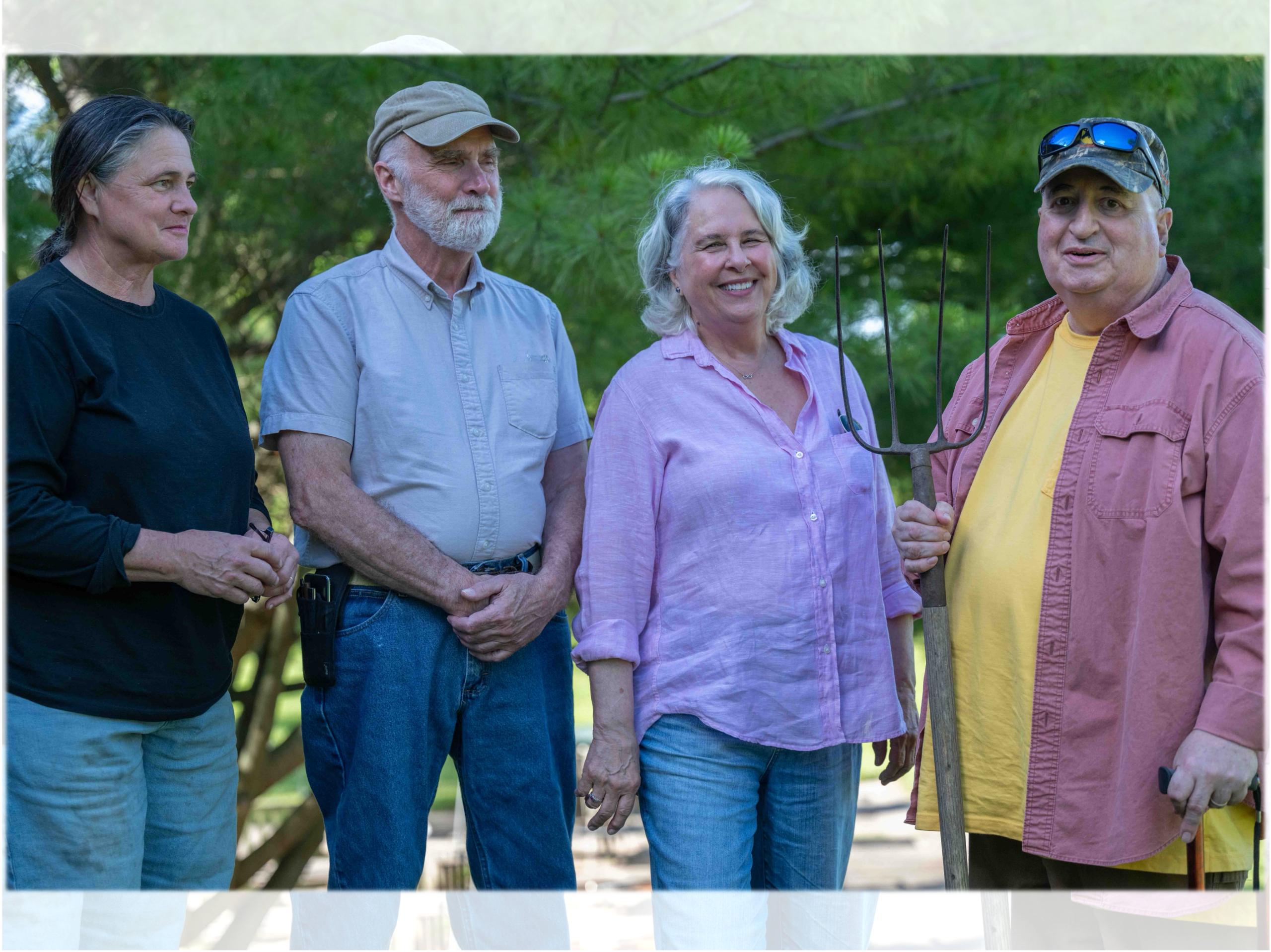
No one in the Freedom Township Preservation Group of six or so people describes themselves as arriving with a master plan.
The movement began with curiosity.
“What happened was originally they were just looking at the land next door to me, and they had posted it, and they were surveying it, so I was just curious,” Hollister recalls. “I thought maybe they would be building a house or something and selling land. So I started looking up Horning Farms, and that led me to a number of different places where I learned about the prospect of an anaerobic digester being built there.”

The more she researched, the more questions she had.
She found information about Vanguard Renewables and eventually connected with the Socially Responsible Agriculture Project (SRAP), a national nonprofit that assists communities dealing with large-scale agricultural and industrial livestock projects.
The organization didn’t tell Freedom Township residents what to think, Hollister explains. Instead, it taught them how to organize.
“What they’ve provided is the framework for this work that we’ve done because I had no idea,” Jill says. “They helped me figure out how to make my own Facebook page. They were saying, ‘To bring people in, you need to make them aware.'”
Quinn says the FTPG’s philosophy became simple: stay grounded in facts.
“We try to be very fact-based,” he explains. “We don’t tell people what to think. We know that [biodigesters] can be really bad for the environment, and we know why, and that’s what we try to communicate.”
It’s a small group, but I think we’re a mighty group. We looked at the data. We looked at the information that’s available out there. We’re not against technology. We’re not against industrial development. But don’t tear up great agricultural land. Once it’s gone, it’s gone.”
— Thomas Quinn
That approach shaped the group’s relationship with Freedom Township officials.
Rather than treating the township board and planning commissioners as adversaries, residents shared research, geological maps, emergency response information and other technical material as everyone learned together.
“It became a learning experience for us and for them,” Quinn says. “Once we learned more, we would go to meetings and we’d hand out information to the board. We’d share information. We’d do our own studies.”
That cooperative approach extended beyond township officials.
Just as deliberately, they drew a distinction between the proposed project and the family whose land had been identified for it. Throughout the campaign, they said their disagreement was with the biodigester proposal, not with Horning Farms or the Horning family themselves.
While public hearings over large developments elsewhere have often devolved into accusations, shouting matches and personal attacks, Quinn emphasizes preserving that relationship was important from the beginning.
“They’re great people,” he says. “I go to church with them. My wife has known the Hornings most of her life because of 4-H. I buy beef from them. I buy cheese, ice cream from them. It’s not about the Hornings. It’s about the idea of the digester.”
That distinction shaped the tone of the campaign. Quinn describes that approach as helping preserve relationships within the township even as residents disagreed over one of the largest development proposals the community had faced.
As FTPG member Jessica Fahlgren puts it, organizing in a rural township required “respect, for everyone, kindness and being committed to building on already established relationships with local government officials.” She explains the common goal was preserving the township’s character while recognizing that “this is not driven by politics, or party affiliation.”

Understanding the Proposal
For FTPG, the proposal raised questions that extended well beyond a single industrial facility.
Members said they were not opposed to farmers operating digesters that process manure generated on their own farms. Their concerns centered on the scale of the proposed commercial operation and its reliance on trucked-in industrial food waste.
“They’re different scales of digesters, and we’re not against a farmer using a digester just for his manure, for the cow manure,” explains FTPG member Bob Sparling. “It’s when it gets to be a commercial feeding lot, or they start bringing in food waste, that it really scales up for the truck traffic, amount of digestate, odor, and all that. So it’s the larger [biodigesters] with the food that we are most concerned about.”
After touring an anaerobic digester at Michigan State University and conducting months of research, Quinn says they focused much of their attention on understanding how a commercial co-digester would operate.
“It brings in industrial food waste from outside the township, truckloads of it,” Quinn explains. “When you bring in industrial food waste, it’s in packages, usually plastic. The food has to be de-packaged, so the packaging is put into a shredder. Then it’s put into a centrifuge to separate the plastics from the food. In that process, there are microplastics.”
Quinn says residents worried that contaminants contained in the incoming waste stream could remain in the digester byproduct, commonly called digestate, which is often applied to farmland as fertilizer.
“When it comes out of the digester, all those microplastics, all that PFAS, if they’re not testing it, it gets spread on the fields,” he adds.
Those concerns became especially significant, Quinn adds, because of Freedom Township’s geography.
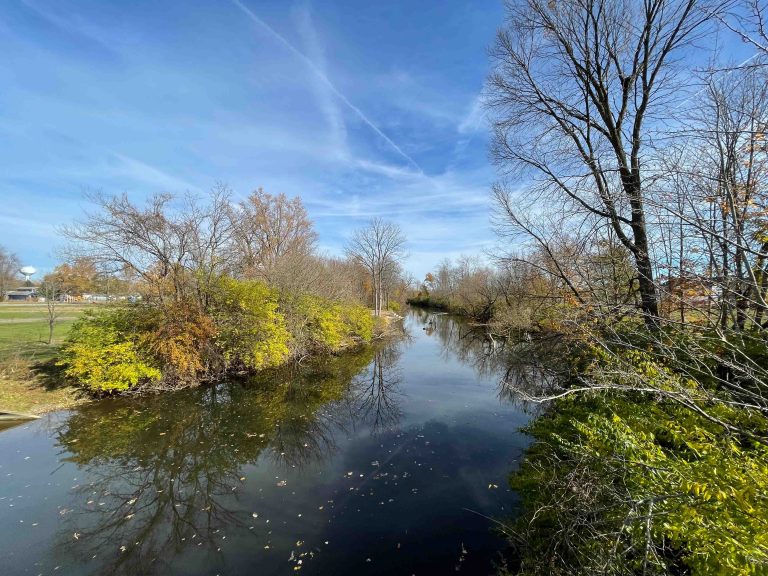
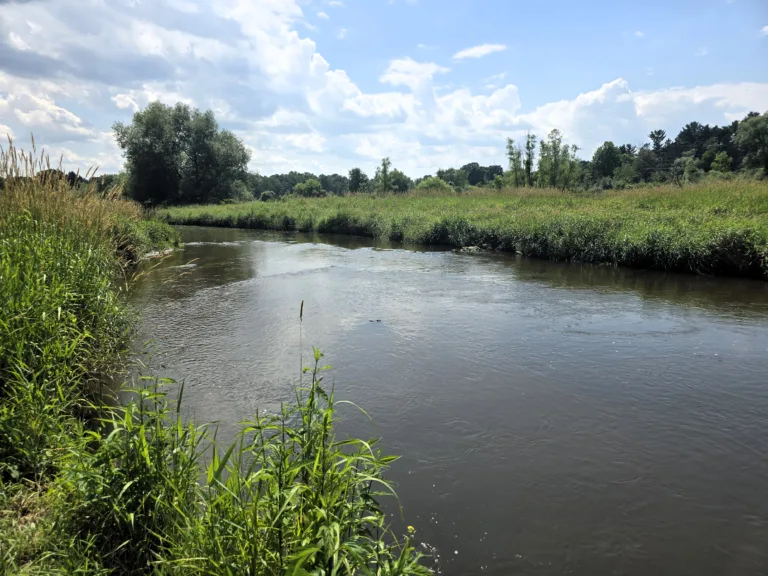
Quinn explains that every home in the township relies on private wells for drinking water. Pleasant Lake, a glacial kettle lake near the proposed site, sits at the headwaters of portions of the Huron River watershed, and residents feared contaminants entering the groundwater could spread beyond a single property.

He adds that the digestate also contains elevated concentrations of soluble phosphorus, which residents feared could contribute to harmful algal blooms in Pleasant Lake if it entered nearby waterways.
Quinn examined response times for the Manchester Area Fire Department and other nearby departments, concluding that the township’s rural location could complicate response to an industrial fire or accident.
That information, along with geological maps and other research, was presented to township officials as residents and local leaders learned about the proposal together.
A Grassroots Education
If the group’s greatest strength was research, its greatest surprise was how quickly neighbors joined in.
The first mailing was modest, with Hollister and a friend designing and paying for the first informational postcard themselves. The postcard invited residents to attend a township board meeting to learn more about the proposed project.
What happened next caught everyone off guard.
Instead of a handful of curious residents, nearly 150 people showed up.
“The first meeting was huge,” Hollister recalls. “The cars went all the way down our road. It was amazing. I didn’t expect that many people to show up.”
“We didn’t come at it with just emotions. We did the research. I was so touched and amazed that people showed up. I went home and just cried because there were so many people.”
— Jill Hollister
As attendance grew, so did support.
Hollister adds, “After the first postcard went out, we had people from the community coming up and donating money toward the Freedom Township Preservation Group so we could continue our work.”
The campaign evolved almost entirely through trial and error.
Hollister learned how to organize public meetings, distribute information, build a social media presence and communicate with residents while simultaneously trying to understand a highly technical proposal.
“I had never been on a Zoom call,” Hollister says. “I don’t have a Facebook page, but I had to have one to do the Freedom Township Preservation Facebook page.”
The education extended far beyond technology.
Sparling and others attended conferences, studied permitting processes, consulted experts, examined geological maps, researched emergency response capabilities and met regularly to share what they had learned.
“It became a learning experience for us and for them,” Quinn recalls of working with township officials. “We would go to meetings, we’d hand out information to the board, we’d share information, we’d do our own studies.”

The commitment demanded more time than any of them expected.
“It was exhausting,” Hollister recalls. “These past few years have been terrible in a way. This has been my second full-time job.”
Yet, she says the workload was eclipsed by the willingness of neighbors to step forward.
“I didn’t expect the help and the people that showed up,” Hollister explains. “Everyone showed up. We asked for help, and we got it from each other. We didn’t know anything at the beginning, but we didn’t come at it with just emotions. We did the research.”
For Hollister, one memory still stands above the rest: “I just remember that first meeting. I went home and just cried because there were so many people.”
When David Met Goliath
Vanguard Renewables is not a small company. Headquartered in Massachusetts, it develops and operates anaerobic digesters across the country and partners with major food manufacturers, retailers and dairy farms to convert organic waste into renewable natural gas. The company is part of Global Infrastructure Partners, which is owned by BlackRock.
For residents of a township of about 1,500 people, that reality was never lost.
Quinn describes the effort as ordinary citizens trying to understand and respond to a proposal backed by a multinational corporation with far greater financial and technical resources.
In October 2025, Vanguard publicly announced it was no longer pursuing the Freedom Township project.
“No. We do believe that Michigan is a great state to do business in. However, that area is not one that we’re looking at,” Billy Kepner, Vanguard Renewables’ director of government affairs and community relations, said in comments reported by WEMU.
Sparling and others remain cautious, however, noting that proposals can change over time.
“I don’t trust those words at all,” Sparling says. “So I’m forging ahead with my efforts to protect the community.”
For Quinn, the experience reinforced the importance of protecting both farmland and relationships.
“I’ve been truly amazed and really happy with how this group came together,” he says. “It’s small, but I think we’re mighty. It is definitely disparate political views, but boy, one thing that unites us is we like our peace. We like our quiet out in Freedom Township. We like the green space.”
Beyond Freedom Township
Although the proposed biodigester is no longer moving forward in Freedom Township, FTPG says its work has shifted rather than ended.
Several now monitor Washtenaw County’s Materials Management Plan, attend environmental conferences and continue researching land-use and zoning issues that could affect future industrial proposals. Others have turned their attention to additional projects proposed elsewhere in the region.
For Hollister, one lesson from the digester proposal was how easily residents can be unaware of projects until they are well underway.
“These guys came in totally under the radar,” she says. “No one knew what it was, and we wouldn’t have known what it was if I hadn’t seen some activity and questioned it.”
She pointed to the proposed and since defeated Consumers Energy natural gas facility in neighboring Lima Township as another example of residents first learning about a major project after noticing activity in the area.
“No one would have known about that if a neighbor hadn’t seen Consumers Energy trucks going in and out,” she explains. “Fortunately, they worked for DTE, they were retired, and they knew what was going on and they did the research.”
Fahlgren expresses a similar concern, saying, “access to information is probably the greatest challenge we face,” adding that organizing in a rural township depends on “respect, for everyone, kindness and being committed to building on already established relationships with local government officials.”
Hollister, Quinn, and Sparling repeatedly return to the same point: despite differing political views and backgrounds, they found common ground in wanting to understand a proposal that they believed could affect their community.
Two years earlier, those survey stakes had looked insignificant, but they became the beginning of one of the largest grassroots efforts Freedom Township has seen.
“It sticks how much we all have in common, whether we have different political views,” Sparling says. “We’re all very concerned about our physical and mental peace in the community and realizing that we can work together regardless of our differences to really try and make some progress.”
Hollister said preserving that unity was intentional from the beginning.
“We were very careful and have been all along to not separate ourselves and say the farmers are bad,” she said. “We asked for help, and we got it from each other.”
Despite Vanguard Renewables’ public statement that it is no longer pursuing a biodigester in Freedom Township, group members say they are not treating the announcement as the end of their work.
Quinn said the experience has taught them that plans can change with shifting priorities and new leadership.
“We don’t believe the fight is over and that Vanguard is going to walk away,” Quinn says, echoing Sparling’s sentiment. “We don’t believe what Vanguard said about not being interested in the project, which is why we are continuing to work with the Township, the MMP and our local and state representatives. All it takes is for a change in leadership at Vanguard or anywhere else in the decision-making process, and all of a sudden, what we thought wasn’t going to happen, happens.”









 114 North Main St Suite 10 Chelsea, MI 48118