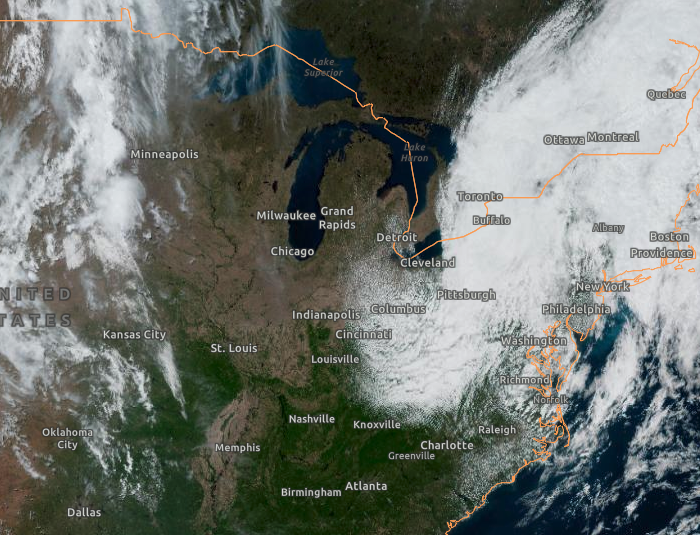





NOAA says El Niño is likely to develop over the next several months, with forecasters now putting the odds at 82% that the climate pattern will emerge between May and July.
The Climate Prediction Center issued an “El Niño Watch” on May 14 after observing increasingly warm conditions beneath the Pacific Ocean surface. The agency described “widespread, significantly above-average subsurface temperatures across the equatorial Pacific,” a signal forecaster often associated with developing El Niño conditions.
El Niño is a recurring climate pattern caused by unusually warm ocean temperatures in the equatorial Pacific. Even though it develops thousands of miles away, it can influence weather patterns across North America by altering the jet stream, the fast-moving band of air high in the atmosphere that steers storms and large weather systems.
As the Pacific warms, more heat and moisture are released into the atmosphere, which can shift where storms track and where heat and rainfall tend to develop across the United States.
For Southeast Michigan, however, the picture is less straightforward.

NOAA’s report does not make specific predictions for Michigan or Washtenaw County, and forecasters caution that spring and summer El Niño signals in the Great Lakes region are often weaker and less reliable than winter patterns.
That uncertainty is partly because Michigan sits in a transition zone where relatively small changes in the jet stream can produce very different local outcomes.
In practical terms, that means the developing El Niño pattern could contribute to a more variable weather setup heading into summer, with swings between cooler and warmer periods and the potential for repeated storm systems. But forecasters say it is still too early to confidently predict how strongly those patterns may affect Southeast Michigan.
For Washtenaw County residents, the most immediate takeaway may simply be that larger atmospheric patterns are beginning to shift, even if the local impacts are not yet clear.
The NOAA report notes that ocean temperatures beneath the Pacific surface have been warming for six consecutive months, while most major forecast models now favor El Niño continuing to develop through the rest of 2026.
NOAA’s next ENSO outlook update is scheduled for June 11.











 114 North Main St Suite 10 Chelsea, MI 48118