




Long before railroads and highways, the Huron River and Native American trails made Ypsilanti the gateway to the county’s earliest American settlement.
Washtenaw County is officially turning 200 years old. The Sun Times News is celebrating with a look at what this place looked like when it was formally established. The story begins in Ypsilanti, which was, in many ways, the start of Washtenaw County’s story after the War of 1815.
A Land Already Well Traveled
Ypsilanti had already been inhabited by a vibrant community for thousands of years by then. European colonizers took advantage of the ancient trade routes in their arrival – either by boat up the Huron River, or by following the trails long established by Native Americans; some of which still survive as the roads used today. Ypsilanti’s first permanent European settlement, Woodruff’s Grove, was established where Grove Street meets I-94, according to local historian Matt Sigfried. Woodruff established a mill and traded with fur trappers and the still extant Native American population.
“I think some of the most surprising aspects of Washtenaw County is what a large Pottawatomi community was here. If you read the original sourcing, the settlers are living right besides these Pottawatomi communities; they’re visiting, sometimes the Pottawatomi would come in and dance for these settlers, and they did live together for a period of time, until removal happens,” Irene Mora, a historian from Dexter pursuing a PhD in history at the University of Michigan, told the Sun Times News.

Why Settlers Chose Ypsilanti
Ypsilanti was the natural first stop on the way in from Detroit. The Huron River at this point came to rapids near that part of the County, but is also relatively easy to ford, making it the natural place for a settlement.
“There were two routes of access to get to Washtenaw County. One was straight from what we know as Michigan Avenue, which was a [Native American] trail at that time, and the Huron River, which comes from Lake Erie. The route from Detroit was a fairly rigorous route; it came through Canton Township, which was basically a swamp, which made passage from Detroit rather rugged,” explains Bill Nichols, President of the Ypsilanti Historical Society. “The first permanent settlement came up the Huron River in flatbottom boats… When they got to Ypsilanti in the 1800s five dams got built on the river, which gives you an indication that there’s a significant drop in water level from the river above the city to below the city; significant rapids as the river travels through. And when they came to that obstruction, they decided that the easiest thing to do was to get off the boats and establish a community. They did that, named it Woodruf’s Grove, and the Woodruf’s Grove community was just a little bit south of Michigan Avenue.”

A Village Takes Shape
Ypsilanti Historical Society operates out of a grand Victorian mansion between Huron Street and Frog Island Park that looks like it’s straight out of Lady and the Tramp. The society houses a wealth of information on Ypsilanti’s history, including its early history. As the City itself explains: “In 1825, three prominent settlers named Judge Augustus Woodward, John Stewart, and William Harwood combined portions of their own land to form the original plat for a new settlement at the crossing. They named it for the Greek patriot General Demetrius Ypsilanti, a heroic figure in the battle that the Greeks were fighting against Turkish tyranny – a struggle for freedom that many Americans likened to our own. With three hundred men, Ypsilanti held the Citadel of Argos for three days against an army of thirty thousand; after his provisions were exhausted, he and his entire command made a daring escape behind enemy lines without losing a single man.”
The Native American trail that would eventually be more or less reworked into becoming US-12, which runs through Michigan Avenue, also naturally ran through Ypsilanti to connect Detroit with Chicago. It would later be extended all the way to Washington State.
“I think it’s important to remember that this area would’ve been overwhelmingly Native American well after it was taken over by the United States,” Sigfried says. Native resistance to the encroachment of the United States lasted until at least 1815, according to Sigfried. “It’s really not until the 1830s that you get a significant [settler] population here. It’s in the 1820s that this area is opened up to buy land.”

New Arrivals Change the County
Once the Erie Canal was established, the Midwest started to swell with settlers who came first by boat. And since the railroads came after Washtenaw County was established, and the Erie Canal goes through upstate New York, the first settlers after the War of 1815 were mostly from upstate New York.
“By the 1830s, it’s people from Upstate New York who are coming and settling, taking the Erie Canal… and that includes people of African decent – having Dutch surnames when enslaved from their history in the old Dutch colonial era, who would’ve been freed after that, and bought property here like White folks in the 1820s. So as soon as property is being sold, within two years, some of the largest land owners will be of African descent. It’s not a huge amount of people – two or three families out of 20 or 30 families; so you would’ve noticed it,” Sigfried added. “It’s in the 1820s you get the shift from a Native majority to an American majority.”
The connections forged during Washtenaw County’s earliest years eventually made Ypsilanti an important stop on one of the nation’s busiest Underground Railroad networks. While support for abolition initially came from only a portion of the White population, the area’s small but growing Black community played a significant role in that history. Historians note that Washtenaw County’s reputation for progressive politics did not emerge overnight or follow a straight path. Instead, it developed gradually over generations, with many of its earliest roots taking hold in communities such as Ypsilanti and Ann Arbor.
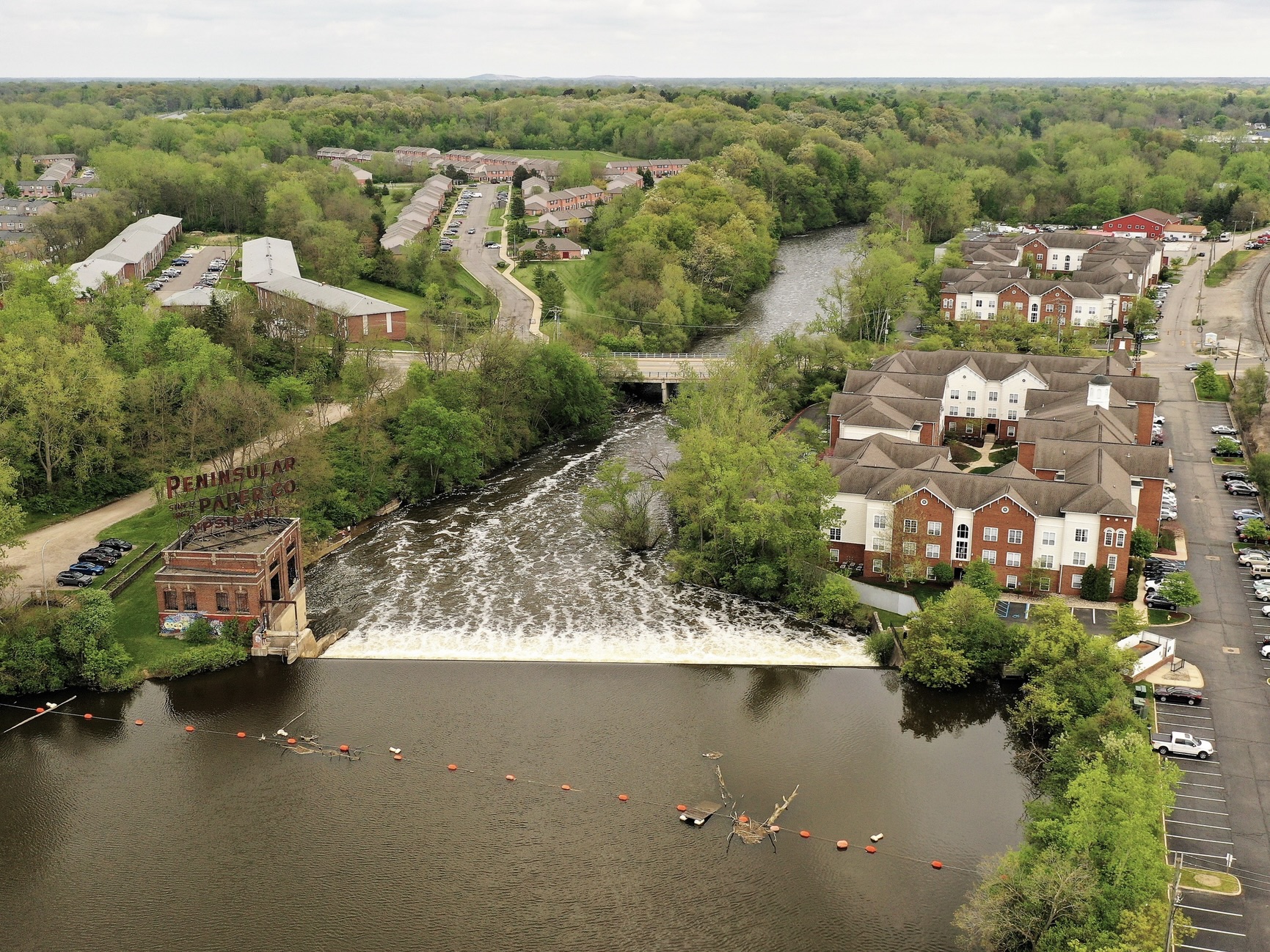
Featured photo: The Peninsular Dam spans the Huron River in Ypsilanti. Although built in 1867, more than four decades after Washtenaw County was established, the dam occupies the same stretch of river that drew some of the area’s earliest settlers. The Huron River served as a vital transportation route and helped shape Ypsilanti’s growth into one of the county’s first communities. Photo by iStock/Getty Images.











 114 North Main St Suite 10 Chelsea, MI 48118