

For many women who became known as Rosies, the choice came early.
They were teenagers. Their families needed help. The country was at war. Factory jobs were open, and young women stepped forward.
Some never got to walk across a graduation stage.
A proposed Michigan law would allow school boards to award honorary high school diplomas to women whose education was interrupted by World War II.
For Michigan Rosies, including women who worked at the Ford Willow Run Bomber Plant in Ypsilanti, the recognition would come decades after many traded classrooms and diplomas for factory floors and a national call to serve.

A Diploma Decades Later
Senate Bill 1002 was introduced May 21 by Sen. Sue Shink, D-Northfield Township. The bill would allow a school district to award a high school diploma to a woman who left high school between Dec. 16, 1940, and Dec. 31, 1946, to join the workforce or the war effort and did not later graduate. Family members could also request posthumous diplomas on behalf of deceased Rosies.
“Women’s role in history is often sidelined,” Shink said in a news release announcing the bill. She said Michigan Rosies supported the state’s manufacturing industry during World War II and helped pave the way for women in today’s workforce.
Jeannette Gutierrez, executive director of Michigan Rosies, said the diploma is a meaningful form of recognition because graduation was something many women of that generation had to give up.
“So often, for that generation, graduating from high school was a big accomplishment,” Gutierrez said.
Many families were still feeling the effects of the Great Depression, she said. College was not the expected next step for many young people, and even finishing high school was not always easy. Some students left school to help support their families.
Then came the war.
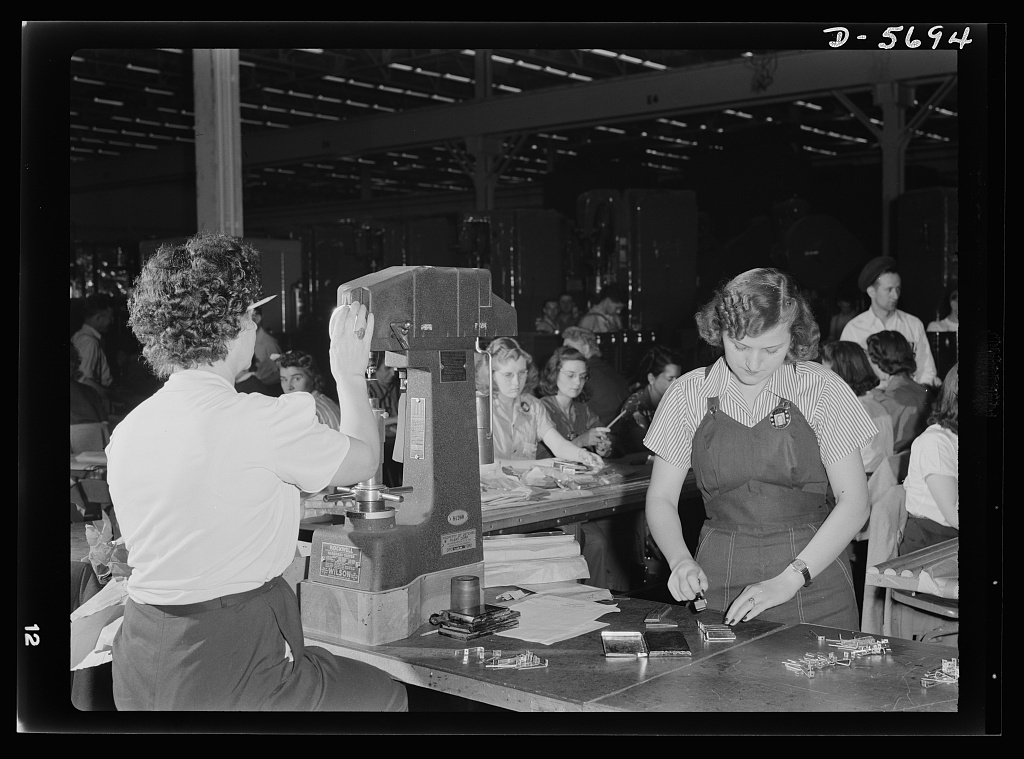
As men left for military service, women entered factories, shipyards and other production jobs. The work was urgently needed, and in many cases, it paid better than other jobs available to women at the time.
More Than a Symbol
Rosie the Riveter became the symbol of that effort, but Gutierrez said the real history belongs to the women behind the image.
“I wish people would understand that Rosie is not just a costume,” Gutierrez said.
Michigan Rosies, formally the Rosie the Riveter Association of Michigan, is an all-volunteer nonprofit dedicated to preserving the stories of World War II Rosies and the WWII generation. The organization also maintains the National Rosie Registry and helps communities recognize the women who supported the country from the home front.
Gutierrez said those stories are not all the same. Some Rosies worked in aircraft plants or heavy manufacturing. Others served through clerical work, agriculture or other jobs that kept the country moving.
What many shared was a willingness to step in when they were needed.
Local Ties to Willow Run
In Washtenaw County, that history is especially close to home.
The Willow Run Bomber Plant became one of the country’s best-known symbols of wartime production. Women at Willow Run helped build B-24 Liberator bombers, taking on skilled industrial roles that became part of the larger Rosie the Riveter legacy.
Gutierrez said several local Rosies she knew personally worked at Willow Run, including Marge Haskins, Helen Jedele and Marian Youngs of Saline, and Laura Eglinsdoerfer and Eva Wells of Milan.
“They were wonderful and inspiring ladies, and they are missed,” Gutierrez said in a follow-up email.

A Quiet Recognition
Gutierrez said many Rosies remain deeply humble about their contributions.
“They feel like they were doing what was asked of them,” Gutierrez said.
But their work helped end the war, bring soldiers home and open doors for future generations of women, she said. Many Rosies are proud to tell young girls they can do whatever they want.
The proposed diplomas would recognize something quieter and more personal than posters, symbols and public ceremonies. They would give back a piece of ordinary life that wartime service interrupted.
For women who answered the country’s call before they had the chance to finish school, it is a way of saying their missed graduations still mattered.
The bill has been referred to the Senate Education Committee.











 114 North Main St Suite 10 Chelsea, MI 48118